Get Full Government Meeting Transcripts, Videos, & Alerts Forever!
Get email alerts on the Fire Station Project topic
No spam. Unsubscribe anytime.
Kingsboro leaders push building committee for lower-cost fire station plan while public outreach continues
Summary
Select Board members and the Fire Station Building Committee reviewed internal survey results and public-feedback plans, with officials emphasizing firefighter health and safety while directing the committee to produce a reduced-scope draft for board review by late July; the public survey closes July 23.
Selectpersons and the town manager spent the meeting pressing the Fire Station Building Committee to produce concrete, lower-cost options for a proposed central fire station while public outreach continues.
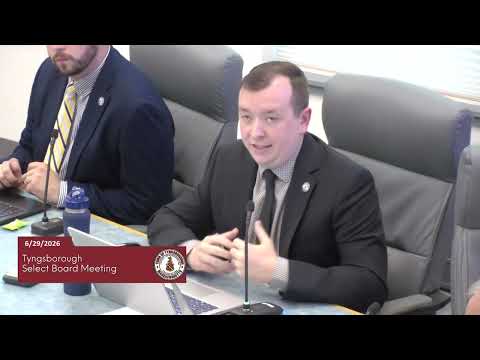
Town Manager Colm Loisell opened the joint session with a report on an internal stakeholder survey and the public engagement schedule, saying the survey launched late last week and “we have just about 172 responses” so far. He told the board the internal group broadly favored retaining the Winslow site and ranked health and safety as the project’s top priority, while cost remained the dominant concern and a majority of respondents favored a target budget well below the $24.8 million figure voters previously rejected.
The discussion focused on two competing pressures: keeping core firefighter safety and apparatus needs intact, and producing a version of the project that is affordable to voters. Selectperson Nate Marino raised response-time and staffing data — noting the difference between town-center and outlying response times — and warned that splitting crews or moving away from a centralized headquarters could create operational and safety risks. “A fire can double in size in about a minute,” Marino said as he described how minute-by-minute differences in response can change outcomes.
Fire department leaders and building committee members urged care in cutting program elements that affect safety or the ability to house and maintain apparatus. Committee members and the chief also said some baseline costs are unavoidable because of required professional services and contingency allowances.
Rather than adopt a board-level cost target immediately, the Select Board agreed on a dual track: continue outreach and listening sessions while the building committee prepares a first reduced-scope draft that shows which elements can be removed or scaled back and the practical impacts of each change. The committee meets July 15; the public survey closes July 23; and the town manager and committee aim to deliver a formal report to the board by the Aug. 10 meeting. The board also discussed opening the design and cost assumptions to more value engineering and clearer public education about what program elements are nonnegotiable.
A separate procedural motion — that the committee present an explicit list of minimum operational requirements to the board — was proposed by Selectperson Constantinos Calabocas but failed for lack of a second and therefore did not advance.
What’s next: the building committee will continue listening sessions for residents, prepare an initial “cut” version by late July that documents the cost and program impacts of proposed reductions, and return to the Select Board with a formal recommendation on Aug. 10. The public survey remains open through July 23; the board will use the survey and the committee’s cut-version to shape the next design and budget steps.
No formal appropriation or bond vote was taken at this meeting; discussion and the next draft are intended to inform any future town-meeting or ballot proposals.