Get Full Government Meeting Transcripts, Videos, & Alerts Forever!
Get email alerts on the School Finance topic
No spam. Unsubscribe anytime.
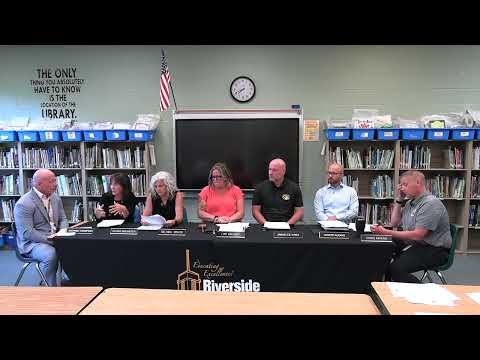
Riverside Local board votes 4-1 to place 1% earned-income tax levy on November ballot to fund $120 million project
Summary
The Riverside Local Board of Education voted 4-1 to submit a proposed 1% earned-income tax levy to voters in November 2026 to help fund a staged $120 million renovation program and bolster operating funds; board members explained the initial 80/20 allocation (operations/permanent improvements) may shift as bond/COPs proceeds and collection rates evolve.
The Riverside Local Board of Education voted 4-1 to place a proposed 1% earned-income tax levy on the November 2026 ballot, advancing district plans for a roughly $120 million renovation program at Riverside and providing additional operating revenue.
Board members and staff told the board the levy-resolution language directs 80% of revenue for general operating and 20% for permanent improvements, but they emphasized the ballot will show a plain 1% tax figure and that the 80/20 allocation appears in the board resolution rather than on the ballot. Staff cautioned the percentage split could change over time as staged Certificate of Participation (COPs) issuances are sold and tax-collection rates mature.
District staff described a staged financing approach using two COPs issuances (each cited at about $60 million) to fund the renovation program rather than a single larger issuance. They said income-tax collections typically reach “full collection” more slowly than bond proceeds, estimating roughly 1.5 to 2 years before collection rates stabilize; that timing affects how much revenue is available immediately for permanent improvements versus operations.
The $120 million program described by staff included a 7–8 classroom addition, reworking the main entrance, added parking, asbestos abatement, new cafeteria space, a second gym, and repurposing the existing cafeteria as a band room. The board indicated renderings are preliminary and final design decisions — including whether to move the board office or create a media center — will be made later in planning. Staff noted about $400,000 is currently allocated for either a media center or board-office remodeling, and the board will weigh final decisions.
Board members and staff stressed contingencies and value engineering will be used to manage unforeseen problems; they acknowledged the district is addressing infrastructure issues such as recently relocated gas lines and potential water-line work. The board also noted a county contribution of $670,000 will appear in the district’s five-year forecast but will not eliminate an estimated near-$4 million deficit point the district is addressing.
Discussion also covered tax-policy context: speakers said state rules cap how much inside-millage revenue can increase from property revaluations (roughly to inflation or a 3% cap), limiting school revenue gains from rising property values.
Several board members framed the vote as a decision to let electors decide; the roll-call vote to submit the levy passed 4-1. The board did not take additional formal action on project design at the meeting; staff will continue planning and bring additional design and financing details back to the board in future meetings.