Get Full Government Meeting Transcripts, Videos, & Alerts Forever!
Get email alerts on the Open Government topic
No spam. Unsubscribe anytime.
Compton training outlines Brown Act basics and SB77 rules for remote meetings
Summary
Special counsel for the City of Compton reviewed Brown Act obligations, advised that a 2021 social-media rule can create violations, and summarized SB77 requirements (hybrid options and accessibility) coming into effect July 1; presenters answered several procedural and enforcement questions.
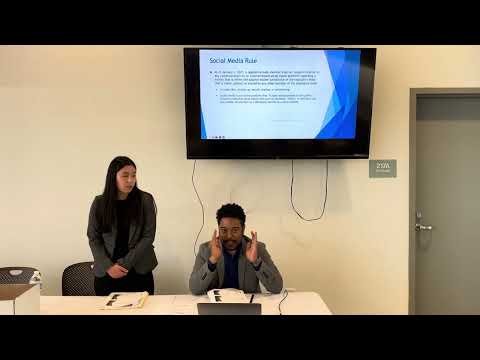
Olivia McGovern and Isaac Young, special counsel from Alshshire and Winer, led a training for Compton commissioners and attendees explaining open‑meeting rules, enforcement risks and new session-access requirements under SB77.
McGovern summarized the Brown Act’s purpose: “A meeting is a gathering of a majority of the members of your body to hear, discuss or deliberate upon any item which is in your subject matter jurisdiction,” and said the law covers in‑person and technological gatherings, including some social‑media interactions. She told attendees that the Act is intended to keep deliberations open and allow public participation.
The presenters flagged a 2021 amendment that limits direct interaction among members on social media about matters within their jurisdiction. Isaac Young said that even reacting to a colleague’s post can be treated as an impermissible communication: “If council member A posted on Facebook, I’m against the new city’s sales tax, and council member B liked that post, that would be a violation of this rule.” The presenters clarified that the restriction applies when the interacting parties are members of the same legislative body and that two members of different bodies typically are not covered.
The session also covered agenda and emergency‑meeting rules (regular agendas must be posted 72 hours in advance; special meetings 24 hours; emergency meetings may be posted one hour ahead under defined findings) and how closed‑session actions must be reported. McGovern read the language of Government Code section 54957.1 about reporting votes and abstentions taken in closed session and said that closed‑session topics are limited to categories such as real‑property negotiations, litigation, labor and personnel.
Presenters briefed attendees on SB77, which they said will take effect July 1. SB77 requires that councils provide hybrid meeting options (for example, Zoom or a two‑way phone connection) and adopt a broadcast‑disruption policy to address disconnections. McGovern noted some details would need local clarification: “The SB77 update doesn’t specifically say that [recording must remain on]; we would have to get back to you to get clarity on that issue.” She also said councils must document a legal basis for any remote participation and that the law includes accommodations for members with disabilities to participate via audio only when needed.
The presenters explained teleconferencing rules for advisory bodies: the council must authorize remote meetings by resolution or policy, and each advisory body must reauthorize remote participation every six months by majority vote as being in the public interest. They emphasized that remote attendees must have the same ability to participate as in‑person attendees, including equivalent time for public comment.
On enforcement, McGovern said any citizen may bring a Brown Act case and that successful plaintiffs can recover attorney fees; she noted contingency arrangements are common for such suits. She warned that proven violations can lead to invalidated actions and attorney‑fee exposure for the city.
The training closed with practical reminders about preserving records (emails and texts discussing city business may be responsive to public‑records requests) and an offer from the presenters to distribute the slide deck and answer follow‑up questions.
The presenters said they will circulate the full presentation to attendees and invited commissioners to follow up with specific procedural questions.