Get Full Government Meeting Transcripts, Videos, & Alerts Forever!
Get email alerts on the Smart City topic
No spam. Unsubscribe anytime.
Morrisville proposes community innovation group, an 18-month pilot to replace Smart City committee
Summary
The town's CIO proposed dissolving the long-standing Smart City Steering Committee and piloting a staff-led "community innovation group" with short-term subgroups for sensor deployments, public education and data evaluation; staff will return a resolution Sept. 9 and promised after-action reports and public records.
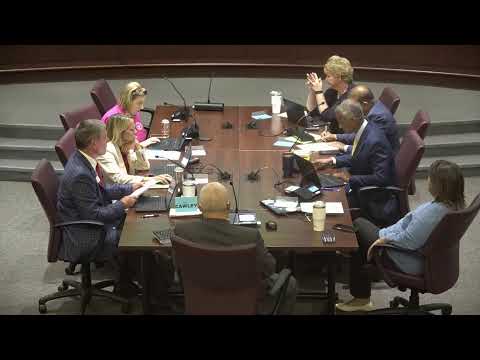
Rick Ralph, Morrisville’s chief information officer, told the council on Aug. 26 that staff wants to shift from an 11-member Smart City Steering Committee to a broader, staff-led model that captures more resident and technical expertise and delivers shorter-term, results-oriented workgroups.
Ralph described the proposal as two components: a community innovation group (a database of interested residents and businesses) and topic-specific, staff-led subgroups that would be formed from that pool and focused on discrete use cases. "The community innovation group itself will not have a cap on the amount of members," he said, describing quarterly orientations for interested participants and smaller subgroups that would align with budgeted innovation requests.
Staff recommended an 18-month pilot in which the existing steering committee would be dissolved and current members invited to participate in the new network; after-action reports and transparency measures would document outcomes and lessons learned. Ralph cited practical use cases including IoT sensor deployments (the town has budgeted basketball-court sensors), sensor-evaluation work with an external partner (Tata Leadership Academy), community education about data privacy and security, and iterative system evaluation.
Council members asked whether the new subgroups would be considered public bodies and requested a charter or formal framework. Rick Ralph said the approach avoids creating a chartered public committee to preserve flexibility but confirmed that subgroup minutes and after-action reports would be public records. "We're avoiding calling it a charter... just so we're not appointing this as a public body," he said, while promising staff would prepare timelines, outreach plans, and options for the first subgroup.
Several council members requested more structure before dissolving the existing committee: a proposed charter or framework, a recruitment timeline, clear reporting cadence to council (status reports or quarterly updates), and expectations for who may serve (staff emphasized primary focus on Morrisville residents and businesses, with outside technical experts brought in when needed). Staff said they would return a resolution for action at the Sept. 9 meeting to dissolve the Smart City Steering Committee and start outreach if council wants to proceed.
Why it matters: The change would move Morrisville from a small, monthly committee model to a flexible, project-based engagement structure intended to accelerate technology pilots and broaden participation while keeping staff accountable through after-action reports and public records.
What’s next: Staff will bring a resolution to the Sept. 9 meeting to dissolve the current Smart City Steering Committee and propose an 18-month pilot of the community innovation group; council requested a charter-like framework, a recruitment timeline, and interim reporting plans.