Get Full Government Meeting Transcripts, Videos, & Alerts Forever!
Get email alerts on the Tribal Recognition topic
No spam. Unsubscribe anytime.
Rep. Lim reintroduces bill to update state entries for Georgia tribes; tribal leaders warn address change could end recognition benefits
Summary
Rep. Lim presented HB43 (LC44-2156) to update codified names and mailing addresses for state-recognized American Indian tribes. Leaders of the Georgia Tribe of Eastern Cherokee said an address change they did not request would effectively terminate their standing and cut federal program access; the committee tabled the bill to seek a fix.
Representative Marvin Lim reintroduced HB43 (LC44-2156) to the State Planning & Community Affairs committee, saying the bill updates codified tribe names and mailing addresses and ensures each state-recognized tribe has representation on the Council on American Indian Concerns. The bill was presented as an administrative update intended to improve tribes’ visibility and ability to be contacted.
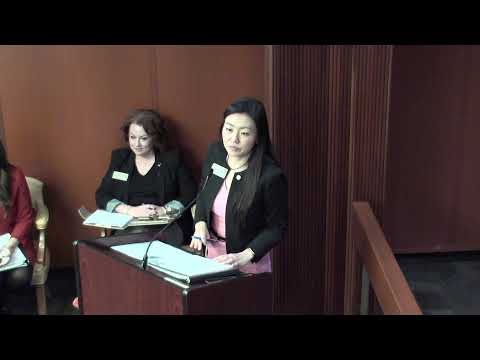
The committee heard extended testimony from leaders of the Georgia Tribe of Eastern Cherokee, who opposed language in the bill that would replace the tribe’s current PO Box in state code. Richard Botts, who identified himself as chairman of the Georgia Tribe of Eastern Cherokee (PO Box 1993, Delano and Griffin, Ga.), said the tribe did not consent to an address change and warned that altering the listed address “is termination” because it would cut the tribe off from federal relationships and programs they currently access, including USDA programs, federal surplus property eligibility and other federal grant or loan opportunities. Botts said the tribe has submitted extensive documentation to support its identity and history.
Wallace Sieboat, who said he serves on the tribal council for the same organization, supplemented that testimony with documentary claims including a U.S. Patent and Trademark Office record for a tribal insignia and other files; he said a for-profit entity incorporated in 2021 (identified in testimony as GTEC Federal Services Company) had attempted to place a different PO Box associated with a group using a similar name and that the tribe did not authorize that change.
Donald Kirkland, vice chair of the Georgia Council on American Indian Concerns, and Neely McCormick, the council’s chair, told the committee that the council itself does not have authority to recognize tribes (the legislature does) and that the council’s role has been to study and advise the legislature. Kirkland said the council’s 2007 study and subsequent work include sworn postmaster testimony and court records that raised questions about which entity controls certain post office boxes and about splits in tribal organizations over decades. He said the council had previously made a legislative recommendation in 2015 related to recognition but defended the council’s impartiality and willingness to provide documentation to the committee.
Committee members repeatedly asked for documentary confirmation of who controls P.O. box 1323 and P.O. box 1993 and whether any group had formally requested the change. Several members suggested a path forward that would avoid changing an existing recognized group’s address: the legislature could add a separate recognition or amendment to recognize the Chickamauga group as distinct rather than substituting an address that another group objects to. One member moved to table HB43 to allow time to pursue adding an additional tribal recognition and to reconcile conflicting documentary claims; the motion was seconded and approved by voice vote, and the committee moved on to the next agenda item.
The record shows contested factual claims in committee testimony: tribal leaders said removing or changing their listed address would strip practical recognition and federal access, while council representatives cited sworn postmaster statements and court documents indicating the disputed PO Box may have been reserved or claimed at a later date. The committee did not resolve which entity controls the disputed post office boxes; members asked council staff to assemble documentation and consider legislative language that would add a separate recognition rather than replace an address.
The committee tabled HB43 to permit reconciliation of the address records and exploration of an amendment to add a separate recognition entry. No roll-call vote or numerical tally was entered into the transcript for the tabling motion; the transcript records a voice vote carrying the motion. The committee then proceeded to consider other bills.