Get Full Government Meeting Transcripts, Videos, & Alerts Forever!
Get email alerts on the Daylight Saving Time Referendum topic
No spam. Unsubscribe anytime.
Rep. Wes Cantrell introduces bill to put non‑binding time‑change referendum before Georgia voters
Summary
Rep. Wes Cantrell told the State Planning & Community Affairs committee he will introduce HB 709 to place a non‑binding referendum on the general election ballot asking Georgians to state a preference among continuing the current system, adopting year‑round standard time, or expressing support for year‑round daylight saving time (the latter would require congressional approval). The committee held a hearing-only discussion and adjourned without a vote.
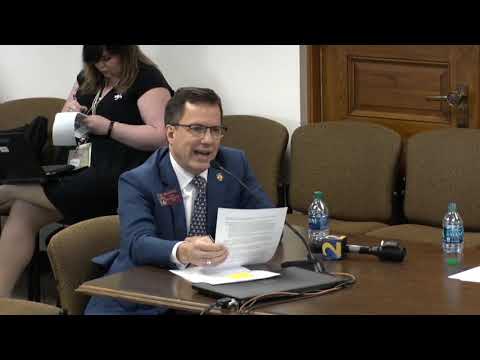
Representative Wes Cantrell introduced House Bill 709 to the State Planning & Community Affairs committee as a vehicle to put a non‑binding referendum on this fall’s general election ballot asking Georgia voters whether to keep the current clock changes, adopt year‑round standard time, or (subject to congressional approval) adopt year‑round daylight saving time.
Cantrell said he ran informal polling on social media that drew about 1,000 responses and found roughly 90% want lawmakers to "pick one and stop changing the time," and that about 70% of those respondents preferred year‑round daylight saving time. "The bill that I bring to you today, HB 709, is to allow the voters of Georgia to state their preference," Cantrell told members. He argued the change would increase evening daylight for recreation and shopping, reduce evening traffic injuries, and yield modest energy savings.
Cantrell cited recent research he said links the clock change to safety and health harms: he said a University of Colorado study found a 6% increase in fatal car crashes the week after the spring shift, a University of Michigan study showed a spike in pedestrians struck after the fall shift, and that some studies report heart‑attack rates rising about 24% the week after springing forward. "We do not have the authority to switch to daylight saving time year‑round without congressional authorization," Cantrell added, noting that a state can opt to keep the current system or move to year‑round standard time but cannot unilaterally adopt year‑round DST.
Committee members pressed Cantrell on practical concerns. Representative Debra Silcox and others said they worry about business impacts and the value of matching national financial centers such as New York and Washington, D.C. Representative McLean asked whether Cantrell would consider amending the proposal to address the Monday after the Super Bowl — a day McLean described as a large day off for many workers — saying, "if I could get Super Monday put on your bill ... it would help me tremendously." Members also raised school‑safety concerns about children waiting at bus stops before sunrise and asked whether bell schedules could be adjusted to mitigate that issue.
Several members urged public education before any ballot question. Cantrell said the committee's session was "hearing only" to gather input and that he would distribute talking points and visual materials to members for use in constituent outreach. He noted Florida and South Carolina have taken state action and said more states moving would increase pressure on Congress to act.
The committee took no vote on the measure at the hearing. Cantrell said he would bring a bill in the next session to reflect voters’ expressed preference and the committee agreed to reconvene for further discussion. The chair adjourned the meeting pending additional outreach and a follow‑up hearing.