Get Full Government Meeting Transcripts, Videos, & Alerts Forever!
Get email alerts on the Daylight Saving Time topic
No spam. Unsubscribe anytime.
Rep. Cantrell’s bill to make daylight saving time permanent advances from committee
Summary
The State Planning & Community Affairs committee voted to report HB 44 favorably after Representative Cantrell argued permanent daylight saving time would reduce crashes, improve health and boost evening commerce; members pressed for more empirical outreach to the military, airports and utilities before final action.
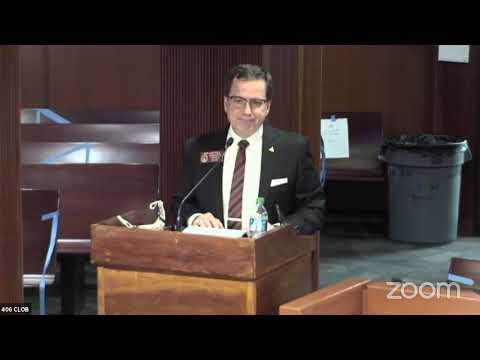
Representative Wes Cantrell urged the State Planning & Community Affairs committee on Jan. 28 to approve House Bill 44, which would move Georgia to permanent daylight saving time if and when Congress authorizes states to do so. Cantrell told the panel he has pursued the issue for years and framed the bill as reflecting popular preference and research on health and safety harms tied to twice-yearly clock changes.
"Time change disrupts the natural order of things," Cantrell said in his presentation, summarizing studies he said show a rise in fatal crashes after the spring shift and other adverse outcomes. He cited a University of Colorado finding of a roughly "six percent increase in fatal car accidents" the week after spring forward and referenced research linking the change to spikes in heart attacks and medical errors.
Cantrell emphasized that HB 44 would become effective only "pending congressional approval," because federal law limits states' authority to adopt permanent daylight saving time unilaterally. He said the proposal aims to end the twice-yearly adjustment that, he asserted, harms sleep, classroom performance and evening economic activity.
Committee members questioned practical and logistical effects. Representative Jackson and others pressed Cantrell on whether he had consulted military branches, municipal airports and legacy operational systems; Jackson warned that some legacy military platforms and regional airport scheduling could be disrupted without detailed review. Cantrell said he had not contacted every military branch but expressed confidence that the armed forces could adapt and offered to provide the committee with research and sources.
Members also asked about interstate and commerce impacts if neighboring states did not follow suit. Cantrell said many businesses already operate across time zones and predicted regional alignment in the Southeast; he noted several neighboring states have passed similar measures.
A lawmaker asked for empirical, non-anecdotal evidence and outreach to stakeholders including Georgia Power, Norfolk Southern, CSX and airport operators. Cantrell acknowledged the request and said he could provide the committee a list of supporting research and resources.
At the meeting’s end, a member moved a committee recommendation of "do pass." The motion was seconded and the committee approved HB 44 by voice vote; the transcript records multiple "ayes" and a few recorded objections but does not include a roll-call tally.
The committee report advances HB 44 to the next stage of the legislative process; because the bill requires congressional authorization to make permanent daylight saving time effective, any ultimate change would depend on federal action. Cantrell told the committee he will supply the requested supporting materials to members.