Get Full Government Meeting Transcripts, Videos, & Alerts Forever!
Get email alerts on the Criminal Justice topic
No spam. Unsubscribe anytime.
Parole board outlines hearing process, victim-notification and panel rules after HB 529 relief
Summary
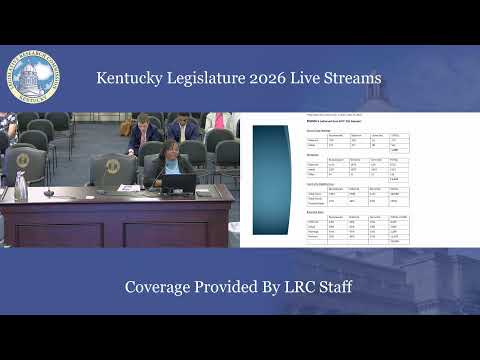
Parole Board Chair Ledra Jones told the Judiciary committee the panel operates with nine members and two-member hearing panels that require unanimous decisions; the board described victim-notification procedures, reconsideration options and preliminary caseload statistics tied to recent legislative changes under House Bill 529.
Ledra Jones, chair of the Kentucky Parole Board, briefed lawmakers on how the board conducts parole hearings, patient-review methods and victim-notification practices following recent legislative adjustments.
"Our goal is to balance justice with public safety," Jones said in opening remarks, outlining statutory constraints, the distinction between face-to-face hearings and file reviews, and how eligibility is calculated by statute and DOC recommendations.
Operational details: the parole board has nine members appointed by the governor and now generally conducts hearings in two-member panels that require unanimous panel decisions; if a panel cannot reach unanimity, the case goes to the full board and a two-thirds vote of the full board is required. Jones described file reviews for lower-level nonviolent offenders and face-to-face (often video) hearings for more serious violent or sex offenses.
Victims' role and notifications: Jones said victims and Commonwealth attorneys receive a 45-day notice of hearings and may submit written impact statements; victims can also request to speak during the hearing week and parole staff will notify them of decisions. She described a reconsideration process — not an appeal — that allows an offender or counsel to ask the board to re-review a matter when new information or alleged procedural issues are presented.
Compensation and staffing: Jones said board-member pay has increased in recent years but remains lower than comparable boards in other states; she cited current annual salaries of roughly the mid-to-high $80,000s for members and about $94,000 for the chair. She also thanked lawmakers for passage of House Bill 529, which the board said provided immediate relief.
What’s next: Jones offered to provide additional statistics and said the board schedules its next regular meeting and victim-hearings on Mondays, with panel hearings throughout the week. Lawmakers asked about quality assurance and consistency checks for two-member panels; Jones said statutory rules and a reconsideration process guard against arbitrary decisions.