Get Full Government Meeting Transcripts, Videos, & Alerts Forever!
Get email alerts on the Neighborhood Housing topic
No spam. Unsubscribe anytime.
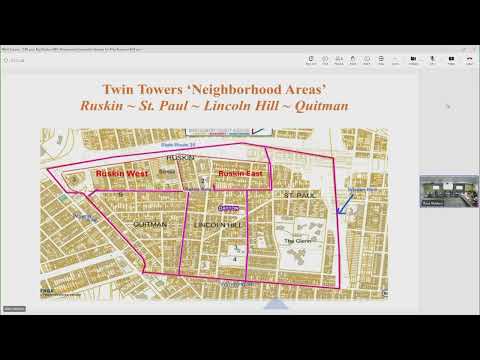
Neighborhood group and city outline Twin Towers plan to build seven homes and shore up enforcement
Summary
Neighborhood development groups told Dayton officials they have $810,000 from a state 'welcome home' grant to build seven infill homes in the Twin Towers/Rustin West area but still face about a $100,000 per-unit subsidy gap; presenters asked the city for infrastructure and enforcement support.
Neighborhood development leaders on Tuesday described a coordinated effort to stabilize Dayton’s Twin Towers (Rustin West) neighborhood through clustered housing, stricter enforcement of property standards and improved public infrastructure.
"We're really excited about the partnership," Jim Barrett, vice president of the neighborhood development corporation (NDC), told the mayor and commissioners during the presentation. Barrett and the presenters said they have consolidated vacant lots and won a share of a state 'welcome home' grant administered by the Ohio Department of Development. "We now have $810,000 and we think we can build seven houses of the original nine that we had planned," the presenters said.
The presenters placed the project in a broader stabilization framework, saying the area has experienced long-term disinvestment: roughly 100 vacant lots, a neighborhood homeownership rate they said is about 30 percent (well below the city's recent levels), and arson and nuisance properties that have harmed the community and threaten Rustin School, a local anchor institution.
Why it matters: organizers argued that building a critical mass of decent homes alongside physical improvements and coordinated social services can restore resident confidence, encourage private investment and protect the neighborhood school.
Details of the housing plan: presenters said infill construction will be clustered within a few blocks, with four planned homes on Hawk Street and additional homes sited nearby. They described a factory-built model that they said costs about $270,000 to deliver (roughly 1,250 square feet, three bedrooms, one-and-a-half baths, basement and parking pad). Appraisals they cited were approximately $170,000, producing an estimated per-unit subsidy gap of roughly $100,000.
"That's what's making housing so freaking hard to do in any kind of volume," one presenter said, explaining the need for deep subsidies and for production partners who can build at scale. Project partners named in the presentation include County Corp (as a production manager) and a private builder the presenters described variably in the meeting transcript; county and nonprofit partners will handle construction and capacity building for infill production.
Rehab and model home example: the group highlighted a nearly finished rehabilitation at 43 George Street, a 140-year-old house they said will be sold as affordable homeownership once the rehab is complete. Barrett said that project required about $160,000 in work and that a sale near the appraisal would roughly break even — underscoring that single-house rehabs can sometimes approach cost parity while new construction often requires larger public subsidies.
City role and next steps: commissioners and presenters agreed the city's most useful supports are public infrastructure (sidewalks, curbs, functioning alleys and streets) and stronger, coordinated code enforcement. Commissioner Beckham asked whether rehab or new construction is more cost-effective; presenters said volume favors clustered new construction but cautioned that scattered single-home builds can leave buyers vulnerable without broader neighborhood improvements.
Commissioners suggested a joint enforcement letter to absentee property owners that could carry the city’s authority — including possible signatures from public safety leadership — and asked staff to follow up. City staff said units such as the fire prevention division already report hazards to enforcement teams and that they will coordinate with the project leads. The presenters also said they have convened roughly 15 local organizations and will form three work groups (including one on public 'civilities') and host a mayor’s walk next week to view conditions on the ground.
What remains unresolved: presenters and elected officials acknowledged a persistent funding gap for each new home and the limits of current inspection staff capacity; precise budget line items and some numerical details in the presentation were presented as program figures and should be confirmed in the project’s formal budget documents.
The meeting concluded with commitments for administrative follow-up on enforcement coordination and for the neighborhood team to continue converting forum input into a detailed action plan.