Get Full Government Meeting Transcripts, Videos, & Alerts Forever!
Get email alerts on the Strategic Planning topic
No spam. Unsubscribe anytime.
Eugene council frames two‑year priorities, debates 'community safety' label
Summary
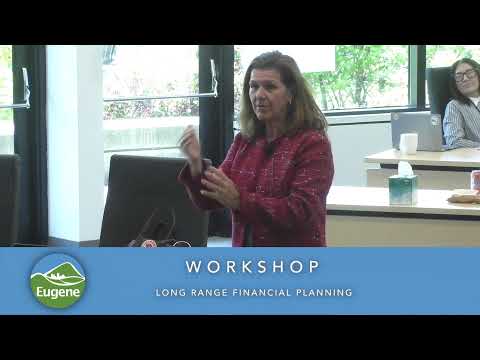
At a July 1, 2026 long‑range planning workshop, the Eugene City Council refined six strategic focus areas — led by financial stability, housing and homelessness, and infrastructure — debated whether to label public safety as 'community safety (and trust),' and set staff follow‑ups for July 13 and the fall budget cycle.
EUGENE, Ore. — The Eugene City Council spent a second day of a two‑day long‑range planning workshop on July 1 refining strategic focus areas that will guide budget priorities and staff work over the next two years, and opened a sustained conversation over how to name and frame public safety in the city’s strategy.
Facilitators from the consultant team asked councilors to define what “success” would look like for a shortlist of strategic focus areas — financial stability; housing and homelessness; transportation and infrastructure; community/public safety and trust; thriving livable community; and organizational excellence — then to identify the top near‑term priorities staff should pursue.
Mayor Knudson said the exercise was meant to set a strategic horizon the council could use when evaluating budget tradeoffs, and to create a shared direction for staff. “We have covered an enormous landscape of points of input,” the mayor said, and asked staff to synthesize the discussion for the council’s July 13 meeting.
The session’s most pointed dispute was about labels: one councilor proposed replacing the phrase “public safety” with “community safety” and adding “trust” to emphasize broader supports such as fire, infrastructure and social services. Councilor Groves cautioned the change could be read as centering policing: “It’s well known as police and community trust,” Groves said of the existing phrasing. Others pressed for a broader framing that would capture the full set of safety‑related services and the community’s sense of safety.
The facilitator urged the council to avoid getting stuck on wording and instead to first agree on the success statements and measures that would make a label meaningful. “We’re framing it now; maybe ‘public safety’ can be the headline and a broader description included,” the facilitator said.
Council work in small groups then produced theme statements and suggested success measures. A financial stability group recommended a long‑term vision that addresses the city’s structural revenue/expense gap and emphasizes measurable benchmarks; participants debated whether language like “within our means” implies cuts rather than investment. On housing, a group urged accelerating production of diverse, affordable housing and increasing shelter capacity to mitigate homelessness harms. The transportation group prioritized Vision Zero goals and maintenance of multimodal infrastructure.
Several councilors connected near‑term budget tradeoffs to those long‑term goals. Councilor Clark and others pressed staff to explain how the framework would feed analytic work on the budget gap; staff said the council’s affirmed goals and budget principles will frame the options staff brings forward.
Councilor Keating emphasized safety metrics, saying the transportation group’s report called for reducing roadway deaths to zero: “Success looks like a community that fully supports Vision Zero,” Keating said. Councilor Groves highlighted economic development as a lever for financial stability: “We have landed two major employers providing 2,000 living‑wage jobs,” Groves said as an example of the type of outcome that would help the council’s fiscal position.
Staff outlined immediate next steps: a synthesized draft of the refined goals and budget principles will return to the council on July 13 for affirmation; staff and technical advisory groups will continue summer work on fiscal strategy, with additional work sessions and budget committee meetings planned through the fall that will fold the strategic direction into the next biennial budget development.
The council closed by endorsing the process as a council‑driven effort to create a clearer framework for evaluating future budget choices and for communicating priorities to the community. “This is foundational work,” the facilitator said. “When we come back on the 13th you’ll see the fruits of that work.”
The council is scheduled to reconvene on July 13 to review the synthesized language and next‑step proposals; staff and consultant teams will bring more detailed service and budget‑analysis materials later in the fall.