Get Full Government Meeting Transcripts, Videos, & Alerts Forever!
Get email alerts on the Budget And Investment topic
No spam. Unsubscribe anytime.
Resident urges $10 million annual investment to reverse decades of disinvestment in West, Northwest Dayton
Summary
Ebony Hastings asked the commission to shift roughly $10 million annually into West and Northwest Dayton to expand violence-intervention sites, double summer youth jobs, provide resident-first rights on rehabilitable homes, and require binding community‑benefit agreements on incentives.
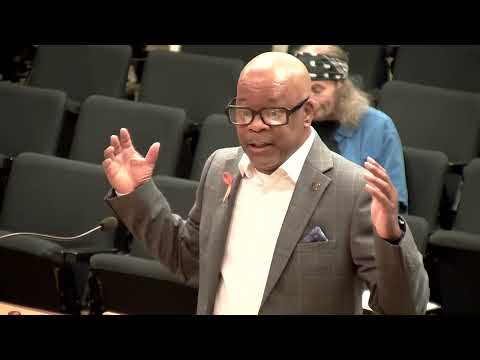
Ebony Hastings, a longtime neighborhood advocate, urged the Dayton City Commission to dedicate roughly $10 million a year in the 2026–27 budget toward long-disinvested West and Northwest Dayton neighborhoods.
Hastings told the commission that last year “four out of five shootings with injuries in this city happened in West and Northwest Dayton,” and she argued that the geography of violence maps directly to historically redlined and disinvested census tracts. Hastings proposed a suite of investments: expand the Cure Violence community-intervention program from one pilot to four or five sites; double summer youth jobs and extend recreation hours during the evening peak; preserve mid-grade homes by giving residents the first right to purchase grade-three and grade-four properties with a $1 acquisition price and forgivable rehab loans; and require binding community benefit agreements and clawbacks for future incentive packages.
Why it matters: Hastings framed disinvestment as a public-safety and economic-justice problem and presented concrete program and financing ideas intended to build resident wealth, reduce crime, and keep amenities in neighborhoods that have lost jobs and services over decades.
Quotes: “The disinvestment is a public safety issue,” Hastings said. “Every future incentive must come with a binding community benefit agreement with real clawback.”
Response and next steps: Commissioners thanked Hastings for raising budget priorities and noted the city’s upcoming budget season; they said staff will present the housing condition report and that budget hearings are available for public input. The commission did not adopt funding reallocations during the meeting; Hastings’ proposals were placed on the record for further consideration during the budget process.
Ending: Hastings’ public testimony signals an organized push to shape the city’s budget priorities as the commission prepares its 2026–27 budget.