Get Full Government Meeting Transcripts, Videos, & Alerts Forever!
Get email alerts on the Community Impact topic
No spam. Unsubscribe anytime.
Homeowners and community leaders describe harassment from call centers and urge city protections
Summary
Long‑time Seattle homeowners and community organizers told the committee they have been targeted by repeated calls, letters and in‑person solicitations — sometimes timed after bereavement — and urged a Do Not Solicit registry, multilingual outreach and OCR resources to enforce the ordinance.
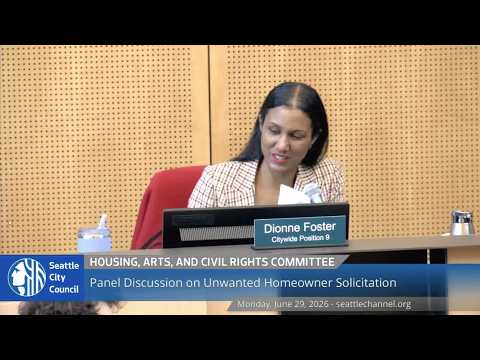
Long‑time homeowners, neighborhood leaders and community organizers told the Housing, Arts & Civil Rights Committee on June 29 that unsolicited buy offers and mass outreach are a persistent, traumatic problem in Seattle neighborhoods.
Panelists and public commenters described tactics they say are used by predatory buyers and wholesalers: automated call‑center outreach, text messages, official‑looking letters, postcards and in‑person visits, sometimes timed to exploit recent bereavement or other family crises. "This has turned into call centers... we've recognized we have A.I. calls now. If you listen closely, it's not even a person," said Chukundi Salisbury of Black Legacy Homeowners.
Panel testimony: Chukundi Salisbury, who said he has lived in southeast Seattle for 29 years, recounted leaving window signs that read "This house is not for sale" and described neighbors receiving candy or personal notes after repeated visits. Maria Batayola, a Beacon Hill community leader, said immigrant and refugee residents often fear unknown numbers and that deceptive mailings and robocalls can trigger trauma. "These letters look official... otherwise you lose out," Batayola said, urging multilingual outreach and community‑based education. Gregory Davis of Rainier Beach Action Coalition traced the issue to broader “disaster gentrification” trends and recommended bundling the registry with complementary policies such as anti‑flipping taxes and vacancy solicitation measures.
Public comment snapshots: Multiple in‑person commenters described receiving repeated unsolicited calls, letters and door visits; one retired city attorney cited Philadelphia and New York examples where municipalities have targeted predatory buyers. Licensed real estate agents who spoke supported the ordinance’s intent but urged exemptions or careful language so licensed brokers and legitimate communications (marketing, education, lenders) are not unintentionally restricted.
What community leaders want: Panelists urged robust outreach (multilingual materials, community partners, social media and traditional mailers), OCR staffing with sufficient budget and authority to investigate call centers and wholesalers, and a short‑term commitment to community organizations to help enroll vulnerable homeowners on the registry. Some suggested using fine revenue to fund community education.
Next steps: Committee members committed to refining language to avoid unintended carve‑outs that would block legitimate assistance (for example, weatherization programs or legal services) and to follow up with OCR and panelists on outreach plans. The item will be formally introduced at committee on July 8; staff and advocates expect iterative refinements during implementation.