Get Full Government Meeting Transcripts, Videos, & Alerts Forever!
Get email alerts on the Building Code topic
No spam. Unsubscribe anytime.
Burke County staff seek to modernize building code, propose housing appeals process
Summary
County planning staff presented Ordinance 2026‑01 to update Chapter 10 of the Burke County code to align with state statute 160D, clarify inspection and appeal processes, and propose a housing appeals board function that could be performed by the Board of Adjustment.
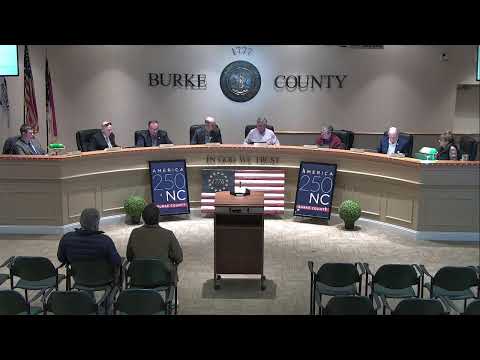
Burke County planning staff told commissioners on Tuesday that the county’s Chapter 10 building code needs an overhaul to reflect a consolidated state statute and modern building practices. Planning Director Alan Lines, speaking during a scheduled public‑hearing item, said the county’s current chapter dates largely from the early 1990s and that the draft ordinance follows the consolidated 160D statutory framework.
"The building code program is really about life and safety," Alan Lines said, describing the draft as a modernization that clarifies staff duties, inspection procedures and notice requirements and brings county practice in line with the state minimum building code.
Lines told the board the draft adds an explicit appeals process after an inspector’s order and proposes a housing appeals board to serve as a backstop for minimum‑housing enforcement. He said the Board of Adjustment could perform that role under the proposed text so the county would not need to create a separate board.
Commissioners pressed staff on how appeals and very serious enforcement actions — such as demolition orders — would be handled and whether residents would retain direct access to the board of commissioners. Lines said the statute appears flexible and that staff would provide a clear recommendation before the formal hearing, scheduled for the regular meeting.
Several commissioners said they favor the county taking a leadership role in setting standards but want clarity on which actions would stop at an appeals board and which would proceed to the commissioners. Staff also noted they could provide a redline for the codifiers; the board acknowledged that much of the draft was new text rather than a line‑by‑line revision because the old ordinance did not contain many of the modern program elements.
What happens next: staff will provide clarifying language and the codifier’s redline ahead of the advertised public hearing at the regular meeting. The hearing is scheduled to proceed at the board’s regular meeting, and commissioners may direct changes based on public comment and statutory review before any final vote.