Get Full Government Meeting Transcripts, Videos, & Alerts Forever!
Get email alerts on the Child Welfare topic
No spam. Unsubscribe anytime.
Judge says foster system strained as Burke County faces placement shortages
Summary
Chief District Court Judge Robert Mullenax Jr. told the Burke County Board of Commissioners the juvenile court and foster-care system are under strain: as of Jan. 5 there were 151 open abuse/neglect/dependency cases involving 214 children and, he later stated, "192 juveniles currently in foster care." He urged support for mental‑health and substance‑use services and more foster beds.
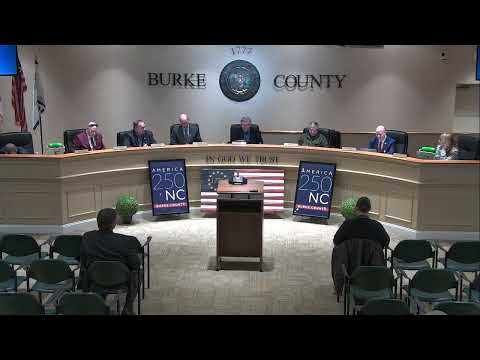
Chief District Court Judge Robert Mullenax Jr. said Burke County's juvenile court and foster-care system face chronic placement shortages and long waits for permanence, and he urged the Board of Commissioners to continue funding mental‑health and substance‑use services that drive many cases.
"As of January 5th this year, there are 151 open juvenile abuse neglect dependency cases in Burke County involving 214 children," Judge Mullenax told the commissioners. Later in his remarks he stated plainly: "There are 192 juveniles currently in foster care here in Burke County. That number is 192." He described repeated placement challenges, noting that "it's not unheard of to have a child sleeping in an office in the Burke County Department of Social Services building."
The judge explained why establishing permanence can take years: court appeals, the age and complex needs of children, and federal requirements that condition funding on reasonable efforts to prevent removal and to reunify families. He also described the licensing and training pathway for foster parents. "All foster parents in North Carolina must complete a minimum 30‑hour course," he said, and local and private agencies both play roles in licensing and placement.
Mullenax outlined the supply‑demand gap: he said Burke County DSS has licensed 16 foster homes while 43 foster homes are licensed in the county overall; however, many children are placed out of county because local capacity is insufficient. The judge stressed the practical effects of scarce placements and the long adjudicatory and appellate processes on children and families, and he called for continued county support of services that address root causes such as behavioral health and substance use.
Commissioners asked whether outreach to faith communities and other local groups could help recruit caregivers; Commissioner Stout suggested churches might play a role, and the judge said the request would be relayed to Department of Social Services staff.
The presentation concluded with the judge thanking commissioners for their attention and asking for continued public and institutional support for children in the system. The board did not take a formal vote tied to the presentation; the remarks were presented as an informational briefing and followed by questions from commissioners.