Get Full Government Meeting Transcripts, Videos, & Alerts Forever!
Get email alerts on the Public Comment topic
No spam. Unsubscribe anytime.
Residents urge tech alternatives and long-term economic study as committee vets sewage-plant sites
Summary
Multiple Lebanon residents urged the committee to consider lower-footprint treatment technologies and to commission an independent, long-term economic impact analysis that accounts for property values and lifetime community costs before advancing any site.
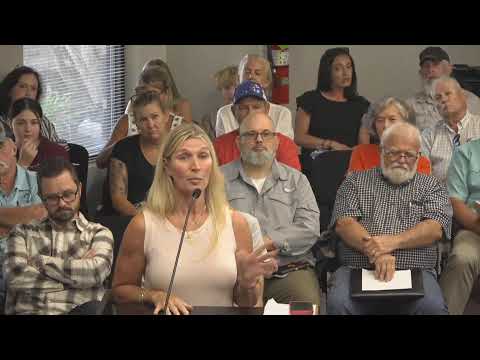
During public comment at the June 29 meeting, several Lebanon residents urged the site-selection committee to consider technical alternatives that would reduce land needs and to analyze long-term taxpayer and property-value consequences before advancing a site.
Terry Monahan (511 Barton Short Ct.) told the committee that newer biofilm reactor technology can significantly cut required acreage and reduce operating costs. "If you go with biofilm reactor type technology, you can use about a half the footprint," Monahan said, adding that retrofits to the existing plant might avoid buying new property.
Other residents pushed for an independent economic impact analysis comparing lifetime costs across alternatives. "The question should be which site creates the lowest total cost to the community over the next 30, 40, 50 years," said Teresa Rogers, who warned that placing a wastewater plant near high-value residential tracts could depress property values and reduce the tax base.
Several speakers also warned that prioritizing "willing sellers" could let sellers negotiate a premium while neighbors bear long-term harms. Commenters said some parcels under discussion are explicitly not for sale and urged the committee to account for relocation, mitigation and life-cycle costs when comparing options.
The committee acknowledged these concerns and directed staff to develop cost estimates and to circulate a revised evaluation matrix; it did not commission an independent economic-impact study at the meeting.