Get Full Government Meeting Transcripts, Videos, & Alerts Forever!
Get email alerts on the Right Of Way Ordinance topic
No spam. Unsubscribe anytime.
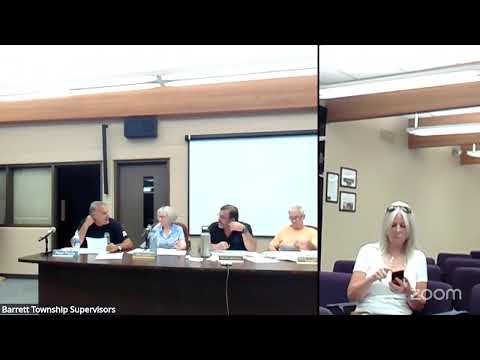
Barrett Township planning commission delays action on right‑of‑way ordinance after residents raise enforcement concerns
Summary
Commissioners reviewed a draft right‑of‑way ordinance submitted for review after enforcement issues in 2025; staff said legal help was needed previously, residents warned that strict width or towing rules could affect yards and mailboxes, and the commission asked for public comments and a line‑by‑line review next month.
The Barrett Township Planning Commission reviewed a draft right‑of‑way ordinance at its most recent meeting after staff said the township lacked clear ordinance language to enforce encroachments and parked vehicles in road rights of way.
Nicole, a township staff member, told the commission that "there were instances last year in 2025 where we did not have appropriate language within the ordinances of ... to make proper enforcements" and that the township had to involve the solicitor to resolve some encroachment cases. Staff said they adapted language from Jackson Township to give the township explicit enforcement authority going forward.
Residents and commissioners focused on the draft's presumptions about right‑of‑way width (the draft uses a presumed 25 feet from center line, or 50 feet total, unless other evidence is shown) and practical local conditions in which many town roads have narrower established widths (commonly 33 feet or 40 feet). One long‑time resident warned about mailbox and landscaping impacts if the draft were applied strictly: "If we went 25 or if say 50 feet for the rightways, we're into half this people's yards," the resident said, urging clearer exceptions and notice requirements.
Concerns were raised about a draft clause that would allow removal or towing "without prior written notice" for vehicles that violate the subsection; speakers said that language should be revised to require notice and to include clear exceptions for short‑term parking (events), delivery or emergency vehicles, and snow emergencies. Commissioners discussed the need for objective mapping (road list or GIS) to communicate presumed right‑of‑way widths to residents and to rely on deeds or other evidence where appropriate.
Several speakers urged the commission not to approve the draft without a careful, line‑by‑line review. One commissioner recommended circulating the draft, compiling public and commission comments, and returning the ordinance to the planning commission next month for detailed review. The chair and staff agreed: residents should submit written comments to staff for compilation and the commission will revisit the ordinance at a future meeting.
No vote was taken on the ordinance during the meeting; commissioners set a near‑term timeline to receive public feedback and to reconvene for a fuller review.