Get Full Government Meeting Transcripts, Videos, & Alerts Forever!
Get email alerts on the Historical Records topic
No spam. Unsubscribe anytime.
Lecture highlights John T. Nichols’s journals, box‑turtle study and ties to Museum of Natural History
Summary
Mary Laura Lamont described John T. Nichols’s prolific scientific output, century‑long box‑turtle marking, archived journals at the Floyd estate and his role identifying new species and historic specimens — material she said are valuable records for comparing past and present coastal ecosystems.
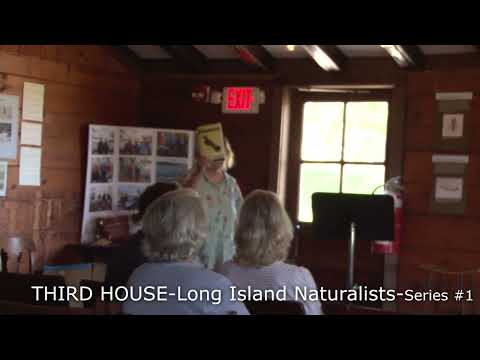
Mary Laura Lamont devoted the second part of her lecture to John T. Nichols, describing him as a world‑class ichthyologist and ornithologist who produced more than 1,000 publications and kept detailed journals from the early 1900s through the 1950s.
Lamont told attendees Nichols worked at the American Museum of Natural History and that his papers and sketches were preserved at the Floyd estate; she said the journals contain daily observations that document historic abundance and occurrences now uncommon on Long Island.
Using archival examples, Lamont described Nichols’s long box‑turtle project in which he marked turtles by carving initials and dates on their plastrons; she recounted finding one turtle bearing a "JN‑1947" mark and noted that such records have been used to estimate centenarian ages for some turtles. "The date on that turtle is June 21st, 1947," she said, and added that the park service later changed marking practices to less invasive notches and photographic ID.
Lamont highlighted Nichols’s role in identifying fish collected on early Vanderbilt expeditions and told the audience that Nichols was dispatched in the early 20th century to identify a shark involved in Jersey‑coast attacks; Lamont said Nichols determined it was a great white, a conclusion she said his museum supervisors initially disputed.
She emphasized the research value of Nichols’s journals — detailed hand‑written entries and sketches that Lamont said allow direct comparison between past and present coastal bird and marine life. Lamont warned that while many items were donated to the Park Service and museums, artifacts and records have been moved into storage or dispersed, and she urged continuing archival stewardship.
Why it matters: Lamont framed Nichols’s journals and long‑running field studies as irreplaceable baseline records crucial to understanding ecological change on Long Island and elsewhere. She closed with a call for better support of long‑term naturalist record‑keeping and citizen science.
During audience questions, Lamont described modern non‑invasive turtle‑identification methods (photographic pattern matching) and said contemporary projects continue even as older practices have been discontinued.