Get Full Government Meeting Transcripts, Videos, & Alerts Forever!
Get email alerts on the Conservation topic
No spam. Unsubscribe anytime.
Education chair Mary Laura Lamont recounts Paul Stoutenberg’s conservation legacy on the North Fork
Summary
At a Long Island Botanical Society lecture, Mary Laura Lamont chronicled Paul Stoutenberg’s decades of volunteer conservation work — from leading the Orient Christmas Bird Count to founding local environmental groups — and warned that development and shifting public interest threaten preserved lands and long‑running citizen science efforts.
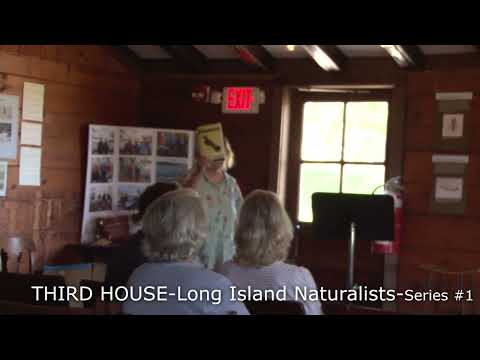
Mary Laura Lamont, education chair of the Long Island Botanical Society and a longtime National Park Service ranger, told a noon lecture audience that Paul Stoutenberg was a driving force for conservation on the North Fork and beyond.
Lamont said Stoutenberg compiled the Orient Christmas Bird Count for decades, wrote a weekly "Focus on Nature" column for roughly 50 years and helped found local conservation groups, including what became the North Fork Environmental Council. "He was a strong environmental advocate," Lamont said, citing volunteer awards and local honors she said he received.
The lecture traced Stoutenberg’s civic work, noting he taught at Greenport High School, served in town government and led grassroots campaigns to preserve wetland and upland parcels. Lamont said the town renamed a local preserve for Stoutenberg in 2013 and that he had helped install more than 40 osprey nesting platforms across the North Fork.
Lamont recalled the community rituals that sustained volunteer efforts: family dinners at the Stoutenberg home after field counts, Barbara Stoutenberg’s fish chowder and the handing off of paperwork and field notes when volunteers rotated responsibilities. "They were a team," she said of Paul and Barbara.
Audience members pressed Lamont on Stoutenberg’s training and the status of preserved sites. Lamont described him as largely self‑taught, influenced by an earlier naturalist, Roy Laam, and said that while some preserves remain, others have faced development pressures. She pointed to community efforts to oppose projects that she and others viewed as encroaching on preserved land.
Why it matters: Lamont framed Stoutenberg’s story as an example of long‑term local stewardship that depends on volunteer time, institutional memory and continued public engagement. She warned that declining participation among younger residents and subsequent development risk eroding both habitats and the civic networks that protect them.
Lamont closed the Stoutenberg portion by showing newspaper photographs and archival material and by reading a poem associated with a 2013 dedication that honored his work. The program then moved to a second lecture topic on John T. Nichols.