Get Full Government Meeting Transcripts, Videos, & Alerts Forever!
Get email alerts on the Environment topic
No spam. Unsubscribe anytime.
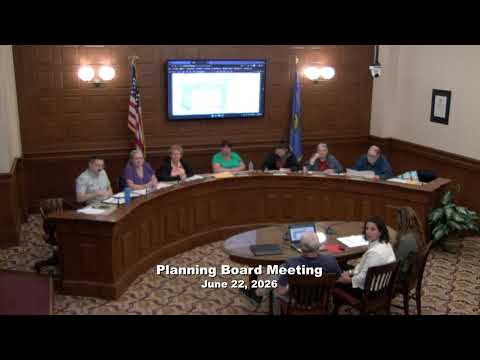
Planning board backs council-referred No Name Pond language, asks staff to clarify buffer definition
Summary
The Planning Board voted June 22 to recommend to city council adopting council's appended subsection requiring compliance with the Maine Stormwater BMP Manual (Volume 3) and also voted to direct staff to return with a review and clarification of the overlay's buffer definition and related code language.
The Lewiston Planning Board voted unanimously June 22 to send a favorable recommendation to city council on amendments to the No Name Pond Conservation Overlay District that retain existing ordinance language and add a new subsection requiring that any soil disturbance within buffer zones follow the Maine Stormwater Best Management Practices (BMP) Manual, Volume 3 (BMP Technical Design Manual).
Shelley Norton, planning staff, said council reviewed the board's earlier recommended language and returned a version that kept the current text and appended subsection 7: "Any work resulting in soil disturbance within the buffers shall comply with the requirements of the Maine Stormwater Best Practices Manual Volume 3 BMP Technical Design Manual published by the Maine Department of Environmental Protection." Norton said staff would ordinarily use the current DEP document in reviews and that the manual is typically updated via a public process.
Board members asked whether referencing "Volume 3" could become outdated if the DEP reorganized the manual. Norton and others explained that the DEP manual is organized into three volumes and that volume 3 is the contractor-focused technical handbook for erosion and sediment controls.
Public commenters, including a longtime neighborhood representative and the author of the proposed subsection 7, urged the board to adopt language that protects the pond and strengthens enforceability. One commenter said the addition of BMP Volume 3 would be "the cookbook" for contractors and would help staff and inspectors determine whether on-site erosion controls were properly installed.
Board members debated whether council's substitution weakened the planning board's original effort to clarify where development may or may not occur near man-made drainage infrastructure. Several members said they supported council's addition of subsection 7 but remained concerned that the definition of "buffer" and the ordinance's treatment of man-made drainage ways could leave future staff without clear direction on when development is permitted.
To address those concerns, the board passed two related actions: (1) a motion recommending that council adopt the returned language while also retaining the planning board's clarifying edits and adding subsection 7 as drafted, and (2) a motion directing staff to prepare a future agenda item that reviews the definition of "buffer" in Article 2 and the No Name Pond overlay language (Article 11, Section 242) with proposed clarifications and intent language.
Board members asked that staff include stakeholder correspondence (letters from the No Name Pond Association/HOA and council correspondence) when returning the item for further review. Norton said staff would report back.
The board's actions send the council-referred language and the request for a more durable clarification of buffer rules back through the municipal process.