Get Full Government Meeting Transcripts, Videos, & Alerts Forever!
Get email alerts on the Penalties And Reliability topic
No spam. Unsubscribe anytime.
PSC takes under advisement request to waive Wagner plant interruption penalties after DOE order
Summary
Staff recommended the commission waive interruption penalties assessed to Wagner unit 4 because the U.S. Department of Energy ordered the unit to operate during a January reliability emergency; commissioners debated whether to base a waiver on federal preemption or on the commission's equitable authority and deferred a decision for a written opinion.
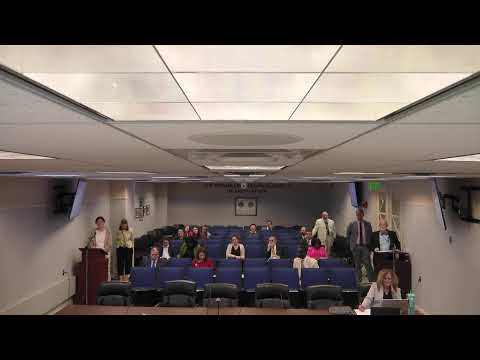
Maryland PSC staff recommended on July 1 that interruption penalties assessed to Wagner unit 4 be waived in full after the U.S. Department of Energy issued an order directing certain generating units to operate during Winter Storm Fern, and the commission subsequently directed BGE to allow Wagner's operation. Staff concluded the penalties would conflict with the federal directive and recommended full waiver; commissioners debated the legal basis and took the matter under advisement.
Brandon Bowser (staff) described two penalties BGE assessed for 19 hours of noncompliant natural-gas usage tied to an 18-hour startup and operation period. Staff noted a federal DOE order (attachment to the staff bucksheet) and a PSC letter order to BGE in late January that directed BGE to grant temporary relief from curtailment requests to ensure reliability. Bowser told the commission that because federal action required operation to maintain grid reliability, the penalties imposed under a state-authorized tariff presented a conflict and should be waived.
Commissioners pressed counsel on whether to justify a waiver by citing the supremacy clause or instead to rely on the commission’s general equitable authority and the tariff’s four-factor waiver test. One commissioner warned that invoking federal preemption broadly could limit the commission’s ability to protect gas-system reliability in other circumstances. A BGE representative said the utility imposed penalties per its tariff and relies on the commission’s waiver process; BGE agreed the commission could base relief on its general authority without invoking supremacy.
Robera James, counsel for Talon Energy and Wagner, said the DOE order left the operator "no choice" but to run the plant. Staff and intervenors agreed the equities supported relief, but commissioners asked staff to prepare a written opinion explaining the legal and factual basis for the commission’s forthcoming decision. The commission took the request under advisement and did not issue a final order at the hearing.
Why it matters: the case raises the interaction between federal emergency directives for grid reliability and state tariff-based penalties for curtailed or interruptible service, and the commission’s choice of legal footing could shape future responses to federal reliability requests.