Get Full Government Meeting Transcripts, Videos, & Alerts Forever!
Get email alerts on the Zoning topic
No spam. Unsubscribe anytime.
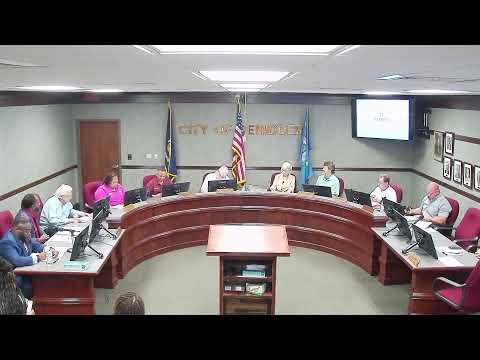
DeRidder council adopts amended fence and wall rules after public hearing
Summary
The council adopted amendments to Chapter 15 (zoning) to define and prohibit continuous 'solid walls' in residential districts, clarify permitted and prohibited fence materials (addressing plywood and OSB), set height and visibility standards, and establish an appeal and enforcement process; council votes to adopt were recorded.
The DeRidder City Council adopted amendments to its zoning code that redefine and restrict continuous 'solid walls' within city limits and residential districts, clarifying which materials qualify as fences and which are classified as walls.
City staff summarized the revisions before the council opened the public hearing. The amendments revise the definition of a wall to include "any structure constructed of continuous uninterrupted material without gaps, including but not limited to running sheets or panels of metal, brick, block, mortar, masonry, plywood, or oriented strand board (OSB)." The ordinance distinguishes walls from fences and adds prohibited materials (continuous sheet goods) and more explicit provisions for permitted wooden privacy fences constructed of individual vertical boards affixed to horizontal rails with board widths not to exceed six inches.
During public comment, Jerry Edler asked whether the language was borrowed from neighboring jurisdictions and warned that prior fence language had, in his view, restricted livestock uses at fairgrounds and could affect FFA activities; staff replied that the language was not borrowed from the cities Edler named. A councilmember thanked staff for clarifying the ordinance language and emphasized the public-safety and beautification goals behind the changes.
The council moved to adopt the ordinance as amended, the motion was seconded, and a roll-call vote was recorded approving adoption.
The changes include requirements for tapering and visibility to protect traffic sightlines, a permitting requirement, a planning-and-zoning commission approval or denial step, an appeals path to the council, and provisions for enforcement and civil fines. The ordinance takes effect as provided in the adopted text; the meeting record does not include the precise effective date beyond the language in the ordinance itself.