Get Full Government Meeting Transcripts, Videos, & Alerts Forever!
Get email alerts on the Open Government topic
No spam. Unsubscribe anytime.
Guam senators challenge session notice; motion to overrule Speaker fails
Summary
Senators raised a point of order saying the legislature’s call to session may have violated the Open Government Law’s 5‑day public notice requirement. The Speaker defended the notifications under the Organic Act and the motion to overrule his ruling failed.
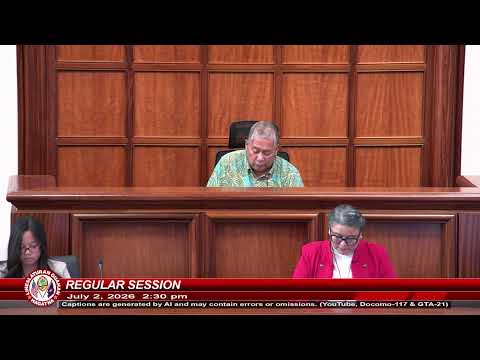
Senator Massey raised a point of order on July 2, saying the legislature’s calls to session may not have complied with the Open Government Law’s five‑day public notice requirement and warning that actions taken at the session risked being declared null and void if the notice was deficient. "We run the risk of having the actions that we performed at this session be declared null and void because we failed to meet the ... 5 days," he said.
Speaker Blas responded that, after consulting the clerk and legal counsel, he ruled the notifications were proper under the Organic Act and within the Speaker’s authority to call a session. The Speaker said legal counsel and the clerk advised the notifications comported with the Organic Act’s requirements for calling the legislature back into session.
A motion to overrule the chair’s ruling on the notice was made and drew extended debate. Several senators urged strict adherence to the Open Government Law’s public notice and agenda‑publication requirements to ensure public access and to avoid legal challenges. One senator asked whether a short recess would allow officials time to post a notice that would satisfy a five‑day requirement; the Speaker replied that it would.
After discussion, members voted by a show of hands and the motion to overrule the Speaker failed. The body proceeded with its agenda.
Why it matters: The dispute centers on whether the procedural steps used to convene the emergency session met statutory transparency requirements. If court review found the notice deficient, actions taken during the session could face legal challenge and potential invalidation, which is especially consequential given the legislature’s work on the fiscal year budget.
What’s next: Senators discussed publishing a public notice during recess to ensure compliance before returning for further business on July 8. The legislature recessed and later scheduled additional sessions and an emergency session to address storm‑related funding.