Get Full Government Meeting Transcripts, Videos, & Alerts Forever!
Get email alerts on the Zoning topic
No spam. Unsubscribe anytime.
Hawarden council debates accessory-building limits, square footage and height
Summary
Council and staff discussed Board of Zoning Adjustment recommendations to change accessory-building rules — including increasing a square-foot cap (examples ranged from 1,000 to 1,200 square feet), addressing a $200 review fee for small sheds, clarifying minimum notice between related hearings, and reconsidering a 16-foot height limit for detached structures.
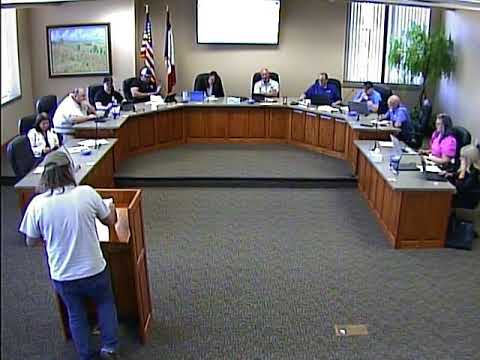
Hawarden, April 22, 2026 — Council members and staff reviewed recommendations from the Board of Zoning Adjustment to revise the city's accessory-building rules, focusing on square footage caps, height limits and procedural timing between zoning and BZA hearings.
A resident (John Grief) and staff reviewed how the ZBA suggested exempting very small garden sheds (roughly 144 square feet or less) from the $200 application process and recommended raising the existing square-foot cap for accessory buildings so fewer property owners must seek exceptions. Council discussion centered on whether to raise the cap (examples discussed included raising limits from around 1,000 to 1,100 or 1,200 square feet) and whether such a change would prompt new requests for exceptions at slightly larger sizes.
Members expressed concern that a 16-foot height maximum for accessory structures may be too restrictive for garages with storage or living space above; one council member said 16 feet could preclude full-height storage or a garage with living space. Staff noted options such as tying accessory-building height to two-thirds of the primary structure's height or setting a higher numeric cap, and said legal counsel (Jenny) would help craft precise ordinance language.
Council and staff also discussed process issues: whether there should be a minimum notice period (for example, five days) between notice of related hearings, how the board and commission scheduling presently results in meetings sometimes occurring on the same day, and how the public-notice schedule (newspaper deadlines) constrains minimum timing.
Council asked staff to consolidate community feedback and the ZBA recommendations and return with ordinance draft language. Staff indicated it would research comparable ordinances from nearby communities and work with legal counsel to deliver a proposed ordinance within roughly a month.
What happens next: Staff will prepare draft ordinance language, work with the city attorney, and present a proposed ordinance for council consideration and a public hearing in a future meeting.