Get Full Government Meeting Transcripts, Videos, & Alerts Forever!
Get email alerts on the School Safety SRO topic
No spam. Unsubscribe anytime.
Heated exchange in Polk County over proposed Goodrich ISD SRO; commissioners ask for legal review
Summary
Polk County’s constable and Goodrich ISD seek a $50,000-per-year interlocal agreement for a part-time SRO; county legal counsel flagged payroll, liability and statutory requirements that the officer be a county employee, prompting extended debate and a direction to return with legal options.
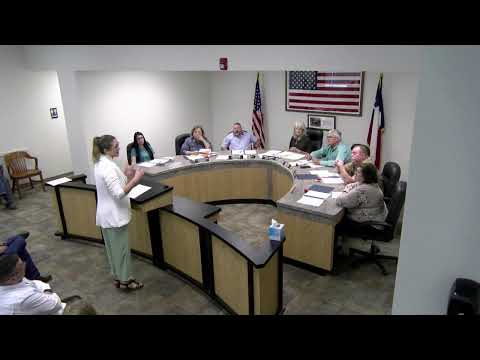
A proposal to place a school resource officer (SRO) in Goodrich ISD sparked an extended, at-times heated discussion at the Polk County Commissioners Court on March 24, with constables and county attorneys disagreeing on whether the suggested interlocal arrangement would meet state law.
Constable Hughes introduced a draft interlocal cooperation agreement between his Precinct 1 office and Goodrich ISD under which the district would contribute $50,000 annually to fund a part-time SRO for an estimated 1,520 hours per year. Hughes and supporters, including Marcelo Rosario (a retired state trooper the constable identified as the candidate), said the arrangement had been operating successfully and at no expense to county taxpayers when asset-forfeiture funds previously supported the position.
"We have been providing a service to the Polk County taxpayers at zero cost to taxpayers for over 3 and 1/2 years," Marcelo Rosario told the court, describing his training and community ties.
County legal staff and outside counsel (Eric McGee of the Texas Association of Counties) raised legal concerns. McGee’s review, summarized to the court, noted that Chapter 791 of the Government Code requires agreements between governmental bodies and that the constable's office is not a separate governmental body for purposes of certain interlocal contracts. He also identified employment and liability issues: the proposed payment structure would have funds paid directly to the constable for payroll, taxes and benefits unless the individual is made a county employee — an arrangement that triggers county payroll, retirement and FLSA considerations.
County officials summarized the core options discussed: 1) Goodrich ISD could fund the position but the county would need to classify the officer as a county employee (possibly assigned to the sheriff or another county agency); 2) the county could change existing policies to allow constables to carry paid deputies (some commissioners said such a policy change would be precedent-setting); 3) the school district could create or fund an ISD police force as some area districts have done; or 4) the parties could craft a contract structure that places commissioning and payroll responsibility with an authorized governmental body.
Commissioners repeatedly emphasized shared goals — protecting students — while also stressing the need to remain "within the parameters of what we can do" under state law. Several commissioners asked staff to obtain a formal written legal opinion that reconciles the conflicting counsel opinions and to return the matter for formal consideration. The court agreed to place the item again on a future agenda for possible vote after additional legal research and stakeholder coordination.
No final contract or vote to adopt an interlocal agreement occurred at the March 24 meeting; commissioners directed staff to coordinate with the sheriff's office, the constable, Goodrich ISD and legal counsel and to return options for court consideration.