Get Full Government Meeting Transcripts, Videos, & Alerts Forever!
Get email alerts on the Solar Deployment topic
No spam. Unsubscribe anytime.
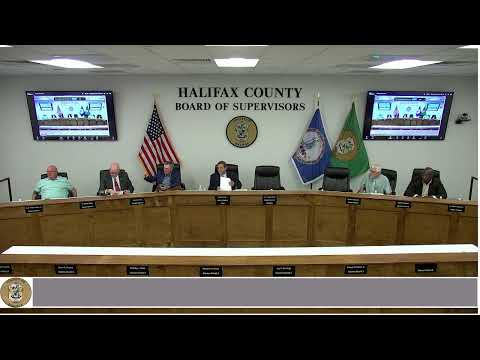
Halifax supervisors approve Boxwood Solar permit after tense debate, add neighborhood safeguards
Summary
The Halifax County Board of Supervisors approved a conditional use permit and site agreement for the 69‑MW Boxwood Solar project after heated public comment and a split vote. The approval included a new condition forming a monthly neighborhood group to address road safety and a $19,000 payment to Liberty Volunteer Fire Department.
The Halifax County Board of Supervisors voted 5–3 on June 30 to approve a conditional use permit for the Boxwood Solar project, a proposed 69‑megawatt facility on Chisum Trail, and to adopt the related site agreement with financial commitments to local needs.
The project had been the subject of extensive public comment: residents and neighbors, including speakers from the Alton area and members of the Amish community, urged denial on safety, zoning and environmental grounds. At the June 16 joint hearing the planning commission recommended denial by a 5–1 vote; the planning commission’s compliance review under Virginia Code §15.2‑2232(A) had previously been transmitted to the board for its decision.
C Solar representatives said the company had revised its proposal after the public hearing and offered a new, written condition (numbered in the board packet as Condition 42) to address local concerns about construction traffic and road safety. The condition requires the project to form a neighborhood group before construction that meets monthly during construction and includes one landowner from Chisum Trail, one landowner from Haja Street, a representative of the local Amish community, a VDOT representative, and project/contract representatives; the group is charged with identifying traffic‑calming and other safety measures.
Rob Propes, a C Solar representative, also reported that the company negotiated an increased, site‑related payment to the Liberty Volunteer Fire Department; the board packet shows an amended commitment of $19,000 to fund conversion of an existing pickup into a brush‑fire response vehicle, up from an earlier $10,000 offer.
Board members split sharply. Supporters cited property rights, local revenue and contract commitments: Vice Chair Smart and other proponents noted that solar projects generate upfront revenue, local contract work and voluntary community contributions, and said the county’s solar ordinance and the project’s conditions mitigate impacts. Opponents — including members who cited prior refusals of high‑traffic uses in the same rural area — pointed to narrow, rural roads, blind intersections at Chisom Trail and Liberty Road, the presence of horse‑drawn traffic from the Amish community, and the degree of out‑of‑area landownership. Several neighbors warned of potential environmental harm to wetlands and questioned assurances about buffers and ongoing stewardship if the project were sold before construction.
A motion to deny the permit was made and seconded, and a substitute motion to approve with the additional conditions was offered and seconded. The substitute to approve carried on roll call 5–3; the subsequent motion to approve the site agreement (the binding payment and mitigation terms) passed 5–2 with one abstention recorded in the minutes.
The board’s approval requires the developer to meet the 42 listed conditions, implement the neighborhood group for road safety during construction and deliver the negotiated community payments and commitments. The county attorney and staff will finalize the site agreement language and track the conditions as part of permit compliance.
What happens next: The conditional use permit and the signed site agreement are the principal local approvals the project needs before construction permits; the board’s package notes that planning and VDOT coordination will continue. Opponents said they will remain engaged and watch enforcement of the conditions; proponents said the negotiated mitigations and community payments address the salient concerns raised at the hearings.