Get Full Government Meeting Transcripts, Videos, & Alerts Forever!
Get email alerts on the Municipal Finance topic
No spam. Unsubscribe anytime.
Council member marks one-year anniversary, cites prior administration for tax spike and developer defaults
Summary
A Hackensack City Council member reviewed the first year in office, saying the current tax bill reflects the prior administration's choices and outlining actions taken to recover $5.4 million in unclaimed developer pilot revenue, curb runaway healthcare costs and secure millions in grants.
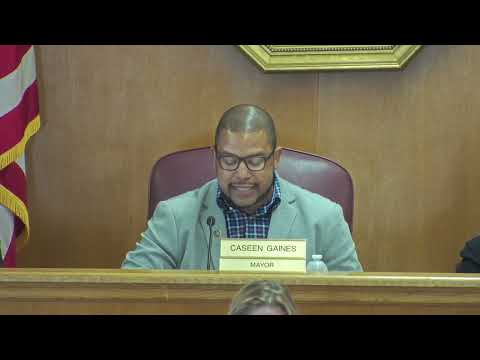
A member of the Hackensack City Council delivered a one-year address to the council, saying the current tax bill reflects the fiscal choices of the prior administration and outlining steps the new council has taken to recover developer revenue, rein in healthcare costs and secure grant funding.
The council member said, "This bill ... is the final financial bill for the previous council's choices," and described an inherited set of late, long-term pilot agreements and rising hidden costs that left the city with a steep bill. The speaker credited the new council with rescinding several last-minute pilot agreements and ordering audits to uncover unpaid developer obligations.
Why it matters: The speaker tied the current tax increase to decisions made before the current council took office, saying residents are bearing the immediate impact. The council member also described active recovery efforts for developer accounts in default and steps taken to reduce municipal exposure to escalating medical claims.
Details of the fiscal claims and responses: The speaker said monthly municipal medical claims averaged "94% higher" during the prior administration's final six months, which contributed to a 48% rise in the city's excess loss insurance premium and left the city with "a massive $2.6 million penalty" when the new council took office. The council launched a review of out‑of‑network provider payments and added a secondary screening agent in January; according to the speaker, those measures reduced the monthly spike to about 5%.
On developer revenue, the council member said an audit found 12 developers in default with about $5.4 million in unclaimed pilot revenue dating back as far as 2018. The city has sent demand letters and, the speaker said, has collected or secured commitments for roughly $2 million so far, including a hand-delivered $1 million check and another commitment for nearly $500,000.
The speaker also highlighted grant and service wins: the council secured more than $11.5 million in grants for infrastructure, flood mitigation and parks at no local tax impact, recovered $136,000 in previously unclaimed grant funds, restored twice-weekly garbage pickup, and used a dormant storm trust fund to replace unreliable plow equipment after finding just one of nine large trucks in reliable condition.
The address included strong language about the prior administration's record. The council member said, "They lied. They projected fiscal health while draining our reserves," and framed the new council's work as a cleanup and a commitment to fiscal transparency and affordability.
What happens next: The council member said the city is pursuing the outstanding developer revenue legally and will continue audits and oversight of healthcare claims and pilot agreements. No formal vote or ordinance was recorded in the address; the remarks were presented as a status report and a public accounting of the council's first-year actions.