Get Full Government Meeting Transcripts, Videos, & Alerts Forever!
Get email alerts on the Education Funding topic
No spam. Unsubscribe anytime.
Crosby‑Ironton students recall testifying on Senate File 1197 as district gauges financial impact
Summary
Two Crosby‑Ironton students described testifying last year for Senate File 1197, a seasonal tax‑base replacement aid now in the state budget; Superintendent Rick Ali said the district is working with its business manager and financial advisor to calculate how much the law will help taxpayers and the school.
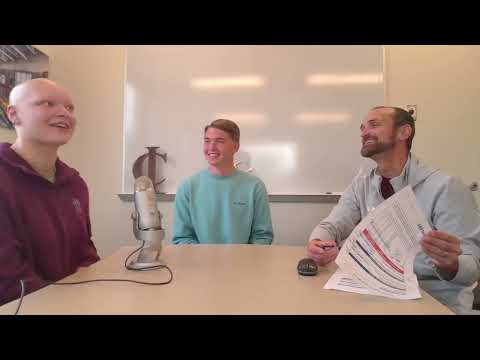
CROSBY, Minn. — Two Crosby‑Ironton students who testified at the state Capitol last year about Senate File 1197 described their experience on a recent CI podcast, and the district said it is still working to quantify how the measure will affect local taxpayers and school finances.
"We got to talk about this bill, Senate File 1197," said Wyatt Holmes, a junior and the student school board representative, describing the bill as "seasonal tax base replacement aid" that reallocates tax revenue so seasonal properties contribute toward local services. "Basically, it's a seasonal tax base replacement aid for the seasonal homes where they're not paying any more taxes, but their taxes are being reallocated and some of that to the school." (Wyatt's description and the bill title were given on the podcast.)
Superintendent Rick Ali said the legislation is on the governor's desk to be signed, and that he and the district are now working to determine the direct effect on Crosby‑Ironton. "Mr. Tollison, our business manager, and myself, we are working with our school district financial advisor Ellers to try to gather a lot of facts about the financial benefits," Ali said. He added the district will wait for exact dollar estimates before sharing detailed figures with the public.
Cadence Swin, a 2025 Crosby‑Ironton graduate who also testified, said the trip to the Capitol was intimidating but meaningful. "It was so much fun. We got to go with Miss McDonald and Miss Shank ... the teachers pulled together some money to help us broaden the experience," she said. "I was really passionate about it." Swin told the podcast she had recently reviewed her testimony and believes about "42% of the homes in our area ... aren't paying taxes towards the school," a figure she cited as part of the case for the legislation (she characterized that percentage in her remarks as an approximation).
Both students described receiving positive feedback from lawmakers after testifying. "They came up to us afterwards and they were like, 'You guys were one of the best speakers we have heard in a very long time,'" Wyatt recalled.
The superintendent credited the students' advocacy as part of broader local engagement but did not quantify its effect on the legislation. "Your work last year ... had a huge impact and that's got to feel good," Ali told the guests, while stressing the district needs time to compute exact impacts before reporting numbers to residents.
Next steps, Ali said, include the district's business manager and financial advisor completing an analysis and presenting the results to the school board and the public. "We'll keep you in the loop on how this is going to roll forward," he said.
There was no formal school‑board action taken during the podcast; the discussion was a celebration of civic engagement and an update on next steps for district staff to determine the law's financial effects.