Get Full Government Meeting Transcripts, Videos, & Alerts Forever!
Get email alerts on the Budget Fy27 topic
No spam. Unsubscribe anytime.
Southern Berkshire committee urges towns to back FY27 budget, warns 112th would bar one‑time funds
Summary
The Southern Berkshire Regional School Committee pressed for clearer town-facing budget materials ahead of special town meetings and warned that under state guidance a '112th' limited budget would exclude one‑time funds — putting restored positions at risk.
The Southern Berkshire Regional School Committee on June 22 urged town voters to back the FY27 budget and promised clearer, numerical materials ahead of special town meetings, saying recent state guidance makes a limited "112th" budget riskier for staffing.
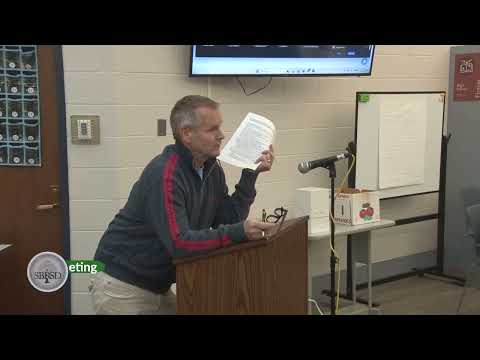
Committee members and public commenters spent more than an hour pressing for a consolidated, easy-to-read budget that residents can use when voting. Kevin Fish, a Sandersfield resident who said he has worked in budgeting for 25 years, told the committee: "You know what really works instead of narratives? Numbers." He asked the district to show a 12‑month projection of FY26 and a comparable projection for FY27 so towns can see the impact.
Public commenter Amy Murray warned voters may misinterpret assessment percentages and asked the committee to produce voter-ready examples: "People are not voting on factual information," she said, arguing posters or handouts should show how a yes or no would change a homeowner's bill and what a 112th scenario would mean for staff rehiring.
Staff told the committee they had just received clarification that a 112th (a limited continuing spending authorization) would be set by the commissioner or designee using the district's general fund and would not count many one‑time revenues the district used in FY26. That guidance means one-time grants or offsets used this year might not be available under a 112th and cannot be relied on to restore positions if the budget fails.
Committee members said the packet’s year‑to‑date FY26 snapshot had been misread by some as showing a $2.5 million surplus. Members and staff repeatedly explained the document was an incomplete snapshot: some grant revenues, school-choice receipts and other credits had not been posted, and July/August payroll accruals would affect the bottom line. "For someone to just look at that and say, 'Oh, we have a $2.5 million surplus' — that's misinformation," a committee member said during the presentation.
The committee agreed to prepare clearer visuals and talking points for the five special town meetings next week outlining (a) what a yes and no vote means, (b) the likely practical consequences of a 112th budget for staffing, and (c) which revenues counted toward the state’s 112th calculation. Members asked staff to post concise materials and a single-page visual that shows town assessments and the district’s scenarios.
The committee also unanimously approved a finance schedule and FY28 budget calendar to coordinate outreach with the towns. The meeting closed with a pledge from members to present consistent, numeric information at each town meeting so voters have the same answers across the five communities.