Get Full Government Meeting Transcripts, Videos, & Alerts Forever!
Get email alerts on the Design And Engagement topic
No spam. Unsubscribe anytime.
Design, capacity and outreach debated as Berwyn plans pool feasibility work
Summary
Committee members and aquatics staff debated whether the project should prioritize replacement or renovation and raised concerns that a full rebuild could reduce the existing Olympic-size footprint; members also pushed for strong community engagement, including Spanish-language materials and a statistically valid survey option in the RFP.
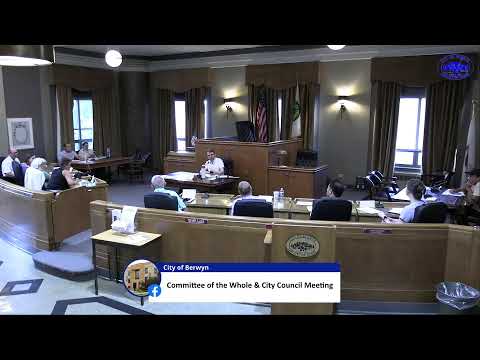
Members of the Pool Feasibility and Design Exploration Ad Hoc Committee spent substantial time on June 3 discussing design trade-offs, facility scale and outreach strategy.
An employee of the aquatics department cautioned that replacing the existing facility could result in a smaller pool footprint and stressed the current facility's regional value: “we have the biggest pool in the area by far. It's an L-shaped Olympic size pool,” the staff member said, adding concern that a new build might not preserve that competitive size. Committee members acknowledged that preserving lane and competition capacity affects programming (swim teams, rentals) and helps with revenue opportunities.
Design discussion covered which features merit direct community input (locker-room types, family/accessible entries, splash-pad features) and technical constraints driven by state code and bather-load calculations. Speakers emphasized that some design choices (for example, adding many features) will increase required lifeguard staffing and ongoing operating costs, and that proposers should include likely operational impacts in their cost models.
On outreach, members reported strong informal survey response and suggested combining informal on-site feedback (comment boxes, QR codes) with a statistically valid survey that could be written into the RFP so the results can strengthen grant applications and referendum materials. Several members urged requiring Spanish-language materials and at least one open house in the RFP scope to ensure inclusive engagement.
No design decisions were made; committee members said those trade-offs should be evaluated by proposers and confirmed by engineering sampling to determine whether the existing pool shell can be replastered or requires full replacement.