Get Full Government Meeting Transcripts, Videos, & Alerts Forever!
Get email alerts on the Land Use Energy Moratorium topic
No spam. Unsubscribe anytime.
Dickinson County sends proposed moratorium on data centers, battery storage and large renewables back to planners for multi‑year review
Summary
After hours of public comment and technical discussion, commissioners directed staff to return a draft moratorium resolution to the Planning & Zoning Board with instructions to develop a staggered, multi‑year study and recommend a timeline for data centers, battery energy storage and other large renewable projects.
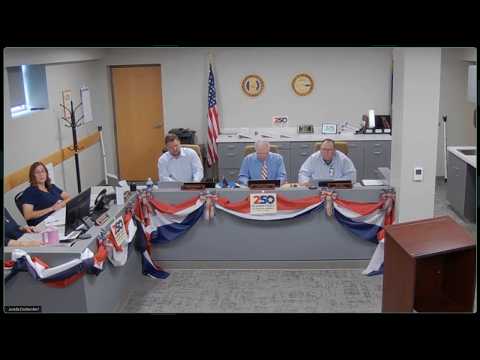
Dickinson County commissioners voted on July 2 to return a draft moratorium on commercial data centers, battery energy storage systems and large‑scale renewable energy projects to the county Planning & Zoning Board for further study and a recommended multi‑year timeline.
The commission’s motion, made during a study session that included several hours of public comment and presentations, asked the advisory board to draft a three‑year framework that staggers study and rule‑making by technology type so the county can evaluate impacts, definitions and mitigation measures in sequence.
Why it matters: County officials and residents said they want clear definitions, reliable impact studies and public engagement before new large energy projects proceed. Speakers raised concerns about groundwater, noise, lighting, siting and how to write regulations the county can enforce and defend legally. One resident who identified herself during public comment said: “Legacy is a big thing,” urging the board to consider long‑term consequences for children and grandchildren.
What commissioners said: Commissioners and staff discussed several approaches: a single omnibus moratorium, separate moratoria by technology, or a “short‑form” conditional‑use checklist that would place more of the burden on applicants to provide engineering and mitigation details before receiving permits. County Secretary Tim (first referenced at SEG 2866) told the board that the energy sector often works on timelines different from typical land uses and that regulations should allow the commission to require additional information from applicants rather than simply blocking proposals.
Planning & Zoning input and expert review: Several speakers asked the county to seek outside technical expertise. A member of the Planning & Zoning Board asked for an industrial hygienist (to evaluate occupational and community exposure risks) and a hydrologist (to assess groundwater effects), and the board said it needs time to assemble and review 21 pages of proposed regulatory language covering multiple industries.
The vote and next steps: Commissioners adopted the motion to return the draft resolution to Planning & Zoning with direction to outline priorities for a multi‑year review. The board will review the draft language, consider expert input, and return a recommended timeline and possible regulatory text. The commission also discussed holding dedicated hearings or special meetings to take focused public testimony on the issue.
What’s next: Planning & Zoning will take the commission’s guidance and prepare a recommendation; the commission will then consider the revised text, possible public hearings, and any formal ordinance or conditional‑use requirements. The moratorium language as discussed will be revisited at a future commission meeting so the county can adopt enforceable rules or modify the moratorium’s duration if needed.