Get Full Government Meeting Transcripts, Videos, & Alerts Forever!
Get email alerts on the Employee Health Insurance topic
No spam. Unsubscribe anytime.
Insurance committee recommends higher deductibles and clinic overhaul as insurance costs surge
Summary
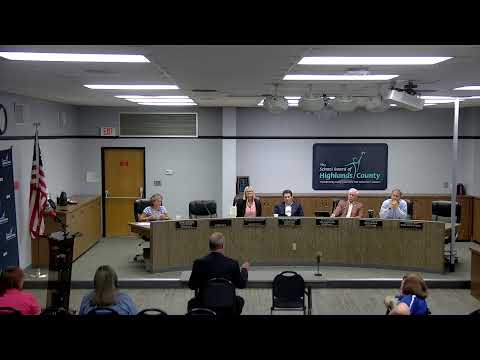
At a Highlands County School Board workshop, staff and the insurance committee proposed moving to a $6,000 deductible, $8,500 out‑of‑pocket max and removing non‑standard diabetic drug coverage to close a projected multi‑million dollar health fund shortfall; Fleet proposed Marsh to manage the employee clinic with a guaranteed ROI, drawing sharp questions from board members and public commenters worried about low‑paid employees.
Deputy Superintendent Andrew Lethbridge told the Highlands County School Board at a July workshop that medical expenditures are growing rapidly and the district’s health fund is projected to be about $3.6 million short at the end of the fiscal year. "In 2022 we were at about $16.5 million in expenditures and by 2025 we're looking at roughly $22 million," Lethbridge said, noting medical inflation and several catastrophic claims as primary drivers.
To close the gap, the insurance committee voted 8 of 10 to send a package of recommendations to the full board. The package includes increasing the plan deductible to $6,000 and maintaining an $8,500 out‑of‑pocket maximum; removing longstanding non‑standard pharmacy benefits so diabetic drugs flow through the deductible and copay structure like other prescriptions; and adding a $1,000 health reimbursement arrangement (HRA) split into $500 up front and $500 contingent on an employee completing a health assessment. "The diabetic drugs will run standard like any other drug would through our plan," Lethbridge said, emphasizing the committee intends coverage to remain, but under standard plan rules.
Committee members also recommended behavioral incentives and a phased approach to premium tiers for dependents. Staff described copay tiers of $10 for generic, $50 for brand and $80 for preferred brand, and said about 219 plan members (including dependents) use diabetic medications. The committee proposed a $25 per‑pay nicotine surcharge beginning in a later year, with initial attestation and later biochemical screening linked to the HRA program.
Fleet, the consortium advising the district, recommended contracting with Marsh to manage and optimize the district clinic and pharmacy sourcing, saying Marsh could deliver lower prices and guaranteed savings. "Marsh has agreed to begin work and not charge until they can produce a guaranteed return on investment," a Fleet representative said, adding that Marsh had provided guaranteed ROI terms to other districts. Staff said Marsh could leverage clinic contracts and pharmacy sourcing to offer lower‑cost options for high‑cost drugs such as GLP‑1 class medications.
Board members asked for more detail and pushed back on timing and risk. Board member Mrs. Howton said she would not support Marsh "right now," citing a near‑2% fund balance projection after the shortfall and concerns about adding administrative fees. "I'm not going to take all the admin fees right now," she said. Several board members and staff said Fleet had pledged to monitor performance and that the district could terminate vendor arrangements if targets were not met.
Public commenters — including union leaders and employees — urged the board to protect lower‑paid staff. Union representatives proposed a two‑year freeze on employee premium increases followed by a cap tied to CPI or a 3% annual limit, a "sharing success" refund of premiums once the fund recovered, and waiving medication deductibles for employees earning under $25,000. Bus driver Cynthia Budka described the stakes: "My contract pay is $20,312 a year... when that $6,000 deductible gets hit... that takes me down to $12,000 a year to live on." Union leaders and committee members asked the board to weigh employee hardship in designing final changes.
Staff and Fleet said the proposed clinic changes were intended to preserve or expand access to lower‑cost medications through the clinic and thereby reduce members’ true out‑of‑pocket cost while improving the fund’s solvency. They recommended allowing Marsh and a proposed contract effectuator to begin preparatory work immediately, with specific contract terms and performance checkpoints brought back to the board for approval. The insurance committee’s recommendation is not a board adoption; it is a recommendation that will be presented for formal consideration at a future meeting.
Next steps noted at the workshop included: Fleet and Marsh providing a detailed contract and timeline, additional modeling of employee impacts and a six‑month review checkpoint if the district authorizes Marsh to begin work. The board did not take a final vote at the workshop.