Get Full Government Meeting Transcripts, Videos, & Alerts Forever!
Get email alerts on the Municipal Finance topic
No spam. Unsubscribe anytime.
Live Oak council approves 2024–25 audit after auditor details vendor fraud and accounting changes
Summary
The Live Oak City Council unanimously approved the city’s 2024–25 financial statements after the auditor reported a vendor ACH fraud with partial insurance recovery, upcoming GASB disclosure changes, and an OPEB enrollment issue; the council said it will adopt an opt‑in retiree policy.
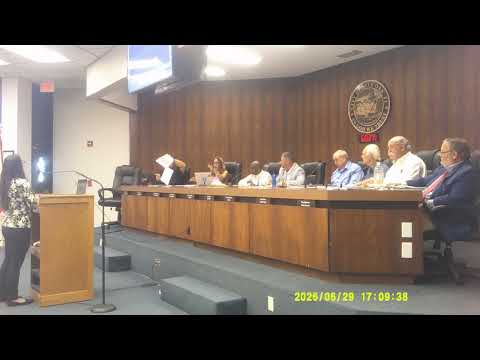
The Live Oak City Council voted to approve the city’s 2024–25 financial statements and audit during a special meeting after the auditor outlined a vendor ACH fraud, modest net loss, and forthcoming government-accounting disclosure changes.
The auditor told the council the city experienced a vendor-fraud ACH scheme that resulted in a loss, with a partial recovery through insurance. "Another attempt was made after that initial one was made, and the new process in place caught it and stopped it before it happened," the auditor said, adding that the unrecovered portion is reflected as a loss in the financial statements but did not "break the bank" and left the city with adequate reserves.
The report also flagged several accounting and disclosure items tied to upcoming Governmental Accounting Standards Board pronouncements (cited as GASB 102, 103, 104, 105 and earlier GASB 34 technical work). The auditor said these standards will expand and reformat disclosures, move budget-actual schedules into the back of the financial statements and require a more detailed management’s discussion and analysis.
The auditor said the team reviewed significant accounting estimates and attached a list of material audit adjustments posted during the engagement, and found no "unduly aggressive positions" or highly subjective estimates that would likely cause misstatement.
On retiree benefits, the auditor reported the city had not been offering retirees the option to continue health insurance under its OPEB arrangement, a practice she said Florida statutes require. She recommended the city consult legal counsel on appropriate corrective action and noted that because retirees would be required to pay the full premium if the offer is made, participation historically tends to be low. The auditor added that if the city were to subsidize retiree premiums in the future, the actuarial liability could increase materially.
A council member responded that Ms. Tammy had raised the issue prior to the audit and that the council will adopt a policy providing an opt‑in for retirees, with administrative safeguards so participation would not create an unintended subsidy.
After the presentation and questions, a council member moved to approve the audit and financial statements; another council member seconded the motion and the council voted in favor. The auditor reminded the body there is no statutory requirement to approve the financial statements before submitting them to the auditor general and said the city may submit on time and review them at a later date if scheduling becomes difficult.
The council’s approval concludes the special meeting’s review of the audit; the auditor thanked Tammy, Heidi and the finance team for handling the difficult transition year and for meeting deadlines.