Get Full Government Meeting Transcripts, Videos, & Alerts Forever!
Get email alerts on the Voter Engagement topic
No spam. Unsubscribe anytime.
Sheriff launches '1835' voter-outreach push for 18–35s after moved polling locations
Summary
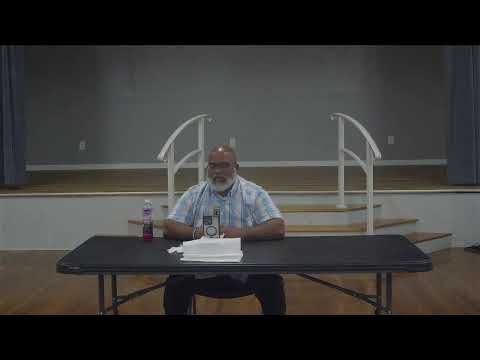
At a community event in Oxford City the sheriff launched the "1835" movement to mobilize 18–35-year-old voters, blamed polling-location moves in parts of Granville County for risking disenfranchisement, and outlined a backup 'souls to the polls' plan with district-by-district transportation and same-day registration help.
The sheriff of Granville County launched a voter-engagement effort called the "1835" movement, urging residents ages 18 to 35 to register, learn how to vote and turn out at early voting and Election Day.
He told attendees the effort is not partisan and stressed civic education and financial literacy as parts of the initiative. "18 to 34 year olds, your vote matters," he said, adding that the campaign will provide resources, registration information and events aimed at young voters.
The sheriff said recent moves of early-voting and polling locations — which he listed as affecting communities such as Bulock, Stovall, STEM, Berea and sites in Oxford — risk making access to the ballot harder for some voters. He said the board of elections attributed the change to the state auditor: "our board of elections said it came from the state auditor," he told attendees, and quoted a board chair as saying he would follow "whatever the boss tells him." The sheriff urged the board of elections to consider threat assessments and security measures rather than wholesale relocation.
As a contingency, the sheriff outlined a "Plan B" to offset any access problems: staging one-to-three "souls to the polls" rallies on the last day of early voting; contracting buses and vans by district to transport voters; and offering same-day registration assistance at events. He said the group has begun contacting churches and transportation providers and cited a past mobilization in which the organizers "fed over a thousand people in one day" to drive turnout.
The speaker also emphasized reassuring young voters about election security and the value of participation. Citing local history, he noted a recent Oxford commission race in which a candidate lost by one vote and used it to underline the point that small margins matter. "If you don't vote, don't complain," he said, urging prospective voters to choose candidates who align with their values.
The sheriff announced an 1835 website and said it would publish voter instructions, polling locations and early-voting dates within 24–48 hours; the transcript records the domain mentioned in two forms (the speaker said both "1835mmovement.com" and "1835.com"). He also urged young people to attend local board and commission meetings to better understand local decision-making.
No formal motion, vote or change to election policy was recorded during the event; the sheriff described outreach steps he and collaborators will take and encouraged community attendance at upcoming events.
The first public activities for the 1835 movement include district-based transportation to early-voting sites and recurring community listening sessions the sheriff said will roll out in coming weeks.