Get Full Government Meeting Transcripts, Videos, & Alerts Forever!
Get email alerts on the Local History topic
No spam. Unsubscribe anytime.
Local historical society outlines how news of the Declaration reached Lebanon in 1776
Summary
Shane Keenan of the Lebanon County Historical Society described how copies of the Declaration of Independence reached Lebanon by horseback, printing and courthouse readings, and noted some local traditions (such as bells rung) that historians cannot fully verify.
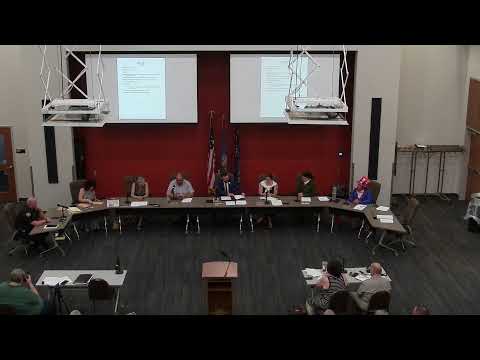
At the July 2 special meeting, Shane Keenan of the Lebanon County Historical Society traced how news of the Declaration of Independence reached the Lebanon area in July 1776 and explained the local context for the city’s current rededication.
Keenan told the council that in 1776 the fastest communications were by horseback and that printed copies—first appearing in the Pennsylvania Evening Post on July 6—were shared through army and state channels before local newspapers copied the text. He said copies were carried by members of Congress to state assemblies and that county sheriffs or clerks often read official notices from courthouse steps.
"At fastest, news traveled by horseback, and printing was a slow, tedious process," Keenan said, describing how the Pennsylvania Evening Post printed the full text and how a wagon passing through town and a courthouse reading likely brought the news to Lebanon within days.
Keenan noted local traditions—such as a report that Salem Lutheran Church’s bell was rung to announce the news—that cannot be fully corroborated in surviving records, but he said the region was largely sympathetic to the patriot cause and that annual July 4 commemorations began soon after.
The presentation provided historical context for the council’s rededication pledge and the decision to open and conserve materials from the 1976 capsule. Keenan closed by urging care in handling fragile materials and by framing the rededication as a continuity of civic remembrance stretching from 1776 to today.