Get Full Government Meeting Transcripts, Videos, & Alerts Forever!
Get email alerts on the Local History topic
No spam. Unsubscribe anytime.
Seminole 250 program traces county’s roots to 18th-century maps and naturalists
Summary
Hosts from the Seminole Cultural Arts Council and the Museum of Seminole County History introduced “Seminole 250,” a local program tied to the national semi-quincentennial that highlights 18th-century mapping by William Gerard DeBrahm and botanical surveys by John and William Bartram to show the county’s colonial-era origins.
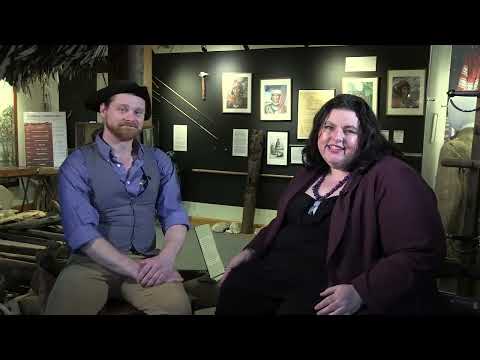
Dr. Deborah Bauer, executive director of the Seminole Cultural Arts Council, and Bennett Lloyd, coordinator at the Museum of Seminole County History, opened a recorded Seminole 250 program that aims to help residents connect local places to the nation’s 250th anniversary.
"Seminole 250 is a plan that we've come up with to figure out how to best commemorate, educate, and talk about why 250 years of history is important for the residents today," Dr. Deborah Bauer said, describing the project as a local extension of federal and state semi-quincentennial planning.
Bauer said local narratives often focus on 19th-century events, but the county’s history extends further back. "Our history goes back all the way to the 1760s, 1770s," she said, noting that those decades shaped what became Seminole County.
The program outlined two early documentary threads: 18th-century surveying and botanical exploration. Bauer identified General James Grant as the first appointed governor of East Florida and said the governor recruited William Gerard DeBrahm, who in 1765 produced what the hosts described as "the first surveyed map of Seminole County." The speakers said DeBrahm traveled along the coast from St. Augustine and worked inland around Lake Harney.
The hosts also highlighted botanical expeditions led by John Bartram and his son William. "John Bartram was...appointed as the royal botanist for North America," Bauer said, summarizing Bartram efforts in 1765 and William Bartram's later 1772 expedition down the St. Johns River to catalog plants and animals that the British crown might exploit or cultivate.
Speakers placed those local activities in a broader colonial context, noting that East and West Florida—unlike the 13 Atlantic colonies that declared independence in 1776—remained loyal to the British crown during the Revolutionary era. The program frames those facts as a reason for Seminole County to document and teach early colonial-era history as part of Seminole 250.
The hosts closed by describing the county’s past as "a lot more complicated than people realize" and invited listeners to tune to future segments for deeper exploration of Seminole County’s colonial-era stories and their relevance to residents who live, work and play in the area.
The recorded program did not include formal actions, votes, or policy decisions; it served as an informational kickoff to the Seminole 250 series.