Get Full Government Meeting Transcripts, Videos, & Alerts Forever!
Get email alerts on the Federal Funding topic
No spam. Unsubscribe anytime.
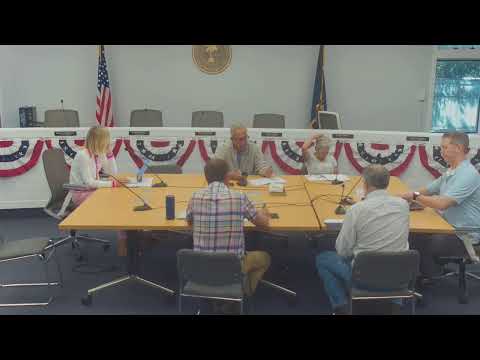
Isle of Palms committee pauses push for Army Corps beach project, explores HUD grants and structures
Summary
The Isle of Palms Beach Preservation Committee learned the city has paused pursuit of U.S. Army Corps-managed beach status because required easements and the local match were judged unrealistic; members discussed redirecting federal lobbying toward smaller hard‑structure funding and state programs.
The Isle of Palms Beach Preservation Committee on Wednesday said the city council recently pulled back a request for a local match to pursue a U.S. Army Corps of Engineers-managed beach project, citing concerns that securing permanent easements along the island is unlikely.
Douglas, who circulated the meeting packet, told the committee the council’s decision followed months of pursuing an Army Corps feasibility study and the need to include a local match in this year’s budget. “Council has just decided, I think last Tuesday, to pull back on that request and back off of that project,” Douglas said.
Jim Davenport of Thorn Run Partners, the city’s federal lobbying firm, told the committee the Corps process can be lengthy and costly and warned communities can spend several million dollars on feasibility studies without ultimately meeting the Corps’ benefit‑cost ratio (BCR) test. “Feasibility studies take at minimum three years,” Davenport said, and recent studies can cost several million dollars, typically with a 50/50 initial study split in some projects; he noted examples where total study costs rose to $5.1 million.
Committee members and staff discussed tradeoffs. Deep Mama, chair of the Beach Reourishment Committee, asked whether federal projects bring obligations that might be unwelcome; Davenport said Corps projects often require public easements, public parking and access standards that can be difficult to meet on partly gated islands. The committee cited a specific concern about Wild Dunes, where including that segment under a federal project would likely require additional public parking or a pass program to meet state-access standards.
Rather than abandon federal assistance entirely, several committee members proposed refocusing lobbying efforts on discrete federal grant support for hard structures. Davenport and others noted that the U.S. Department of Housing and Urban Development (HUD) has funded individual breakwater or similar projects through earmarks in the past, though those awards are typically much smaller than Corps authorizations. Committee members suggested briefing the local congressional delegation and using Thorn Run Partners to pursue HUD or other targeted appropriations.
The committee emphasized that the council remains the decision authority on pursuing federal funding and that any new lobbying direction would be presented to council for approval. The meeting concluded with members agreeing to consider hard‑structure alternatives while awaiting results from ongoing engineering studies.
The committee will revisit federal funding strategy after receiving the next round of local engineering recommendations and any new cost or easement information.