Get Full Government Meeting Transcripts, Videos, & Alerts Forever!
Get email alerts on the Energy Procurement topic
No spam. Unsubscribe anytime.
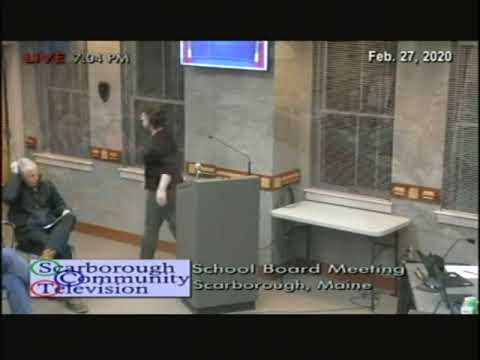
Scarborough board authorizes purchase of net energy billing credits under new Maine framework
Summary
After a presentation from the district's counsel, the board voted to authorize the superintendent to enter long-term net energy billing/power-purchase agreements sized to no more than 70% of historical usage, a structure CES and the district's counsel said should yield near-term savings while carrying long-term risks and contingencies.
The Scarborough Board of Education voted Feb. 27 to authorize the superintendent to enter contracts to purchase net energy billing credits and associated power-purchase agreements under Maine's recently enacted net-metering framework.
Aga Dixon, the district's outside counsel, told the board the arrangement would have the district commit to buying a percentage of the output of several renewable projects for 20 years and then receive a tariff credit on its CMP bill. "If you don't see any credits on your CMP bill, you don't pay," Dixon said, describing one of the primary contractual safeguards against changes to the law or to crediting practices.
Dixon and the energy broker CES recommended a conservative sizing for Scarborough: authorizing the superintendent to buy no more than 70% of the district's historical usage, which the presenters said corresponds to roughly 1.5% of the output of the pooled projects. Dixon explained how the district's savings would be calculated: the tariff credit set annually by the Maine Public Utilities Commission minus the contract price paid under the power-purchase agreement.
Board members asked about contingencies if the legislature or rules change and about CES's vetting. Dixon said legal protections and market scale reduce risk: contract-law protections make wholesale repeal difficult and many buyers across the state participate, lowering the district's market exposure. She also described that the law's tariff-credit mechanism is set by the Public Utilities Commission and that the district would still receive a CMP bill for supply and delivery.
Some board members emphasized the speculative element of a 20-year commitment but supported the vote after hearing the conservative sizing and legal safeguards. One member said the arrangement is a way to "think outside the box to get more savings," while counsel advised that the board could later choose to keep or sell renewable energy credits (RECs) tied to the purchase; Dixon noted that selling RECs would forfeit the district's ability to claim offsetting renewable usage.
The motion to authorize the purchase was made and seconded on the record; the transcript records the chair's call for "all those in favor" and then "motion passes." The transcript does not record a roll-call tally or a named mover/seconder. The district counsel and staff said they would continue to refine the contract details and report back to the board.
Next steps: the superintendent is authorized to conclude the contracts consistent with the packet and the conservatively sized commitment; the board will receive follow-up details and auditing information about credit allocation and REC handling.