Get Full Government Meeting Transcripts, Videos, & Alerts Forever!
Get email alerts on the Land Use topic
No spam. Unsubscribe anytime.
Albert Kang appeals denial of medical cannabis grow site plan; board tables decision pending police security plan
Summary
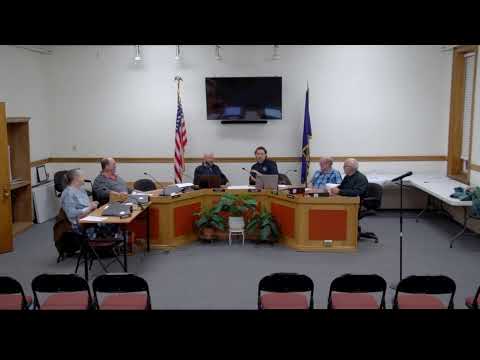
At its second February meeting the Scaggan Planning Board heard an appeal from applicant Albert Kang for a minor site plan review for a medical cannabis cultivation facility at 667 Waterville Road. The board tabled the matter to allow staff to collect a police security plan and other documentation; the applicant flagged an April 1 license renewal deadline.
At its second February meeting the Scaggan Planning Board heard an appeal from applicant Albert Kang seeking reversal of a staff review denial for a proposed medical cannabis cultivation facility at 667 Waterville Road.
Kang said he and his tenant applied to the Office of Cannabis Policy (OCP) after a prior code enforcement officer indicated the location could host medical cultivation. Kang told the board he had brought the buildings up to code following state inspections, installed required egress and exit signage, bought a fire-department lock box after receiving specifications from the fire chief and paid roughly $75,000 out of pocket for site work, including an estimated $25,000 septic replacement.
“The state came and inspected and they approved it and our tenants started to cultivate legally,” Kang said. He added that staff guidance earlier in the process led him to believe a minor site review was not required until later conversations with current town code staff.
Town code enforcement staff explained the property’s combined use of multiple buildings — two former kennels (each roughly 3,000 and 2,800 square feet, per the applicant’s representative), a storage garage and a newly placed mobile home — pushed the total area used for the operation above the town’s 5,000-square-foot threshold that triggers a more extensive site review. Aaron Crocker, the town’s code enforcement officer, said inspectors measure areas in active use for the business to determine applicability.
The fire chief told the board that his earlier concerns had been addressed during follow-up inspections but cautioned that evolving standards could require additional measures in the future, including possible sprinkler requirements tied to an NFPA standard under consideration. The police chief was not present; staff noted the chief had not approved security and safety aspects and that the sheriff’s office typically expects multiple exterior cameras, motion detectors and locked premises for similar operations. Kang said multiple cameras and motion detectors are in place and agreed to provide a written security plan.
Board members raised a timing concern: the tenant’s state license must be renewed in spring, and the applicant said April 1 was the practical expiration date. Officials said OCP requires applicants to submit renewals weeks in advance. To allow the police chief an opportunity to review a formal security plan and to collect any remaining documentation, the board voted to table the appeal until its next meeting and staff agreed to send a letter to the police chief seeking specific security requirements.
The board’s action was procedural: it did not reverse or uphold the staff decision but paused consideration so the applicant and staff could supply additional information. The board scheduled further consideration for its next meeting on March 3.