Get Full Government Meeting Transcripts, Videos, & Alerts Forever!
Get email alerts on the Senior Centers topic
No spam. Unsubscribe anytime.
County executive proposes volunteer 'warm handoff' as state cuts force senior-center closures
Summary
Northampton County Executive Tara Zerinsky told the Human Services Committee the county cannot sustain some senior centers after state funding cuts and outlined a community-led 'warm handoff' plan that would keep Northampton Borough Senior Center open through local volunteers, limited county rent support and a new 'Neighbors in Need' fundraising push.
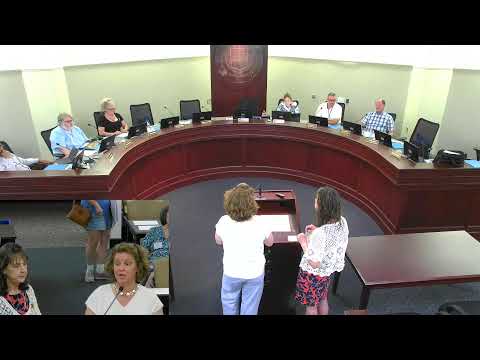
County Executive Tara Zerinsky told the Northampton County Human Services Committee on July 2 that state funding cuts have left local senior centers at risk and that the county is pursuing a volunteer-centered model to maintain services at the Northampton Borough Senior Center.
Zerinsky said the county faces an overall drop in state contributions and described a $50 million statewide funding gap cited in recent coverage. She said Northampton Borough Senior Center is “effectively closed as far as the county is concerned” and that the county has drafted a "warm handoff" plan to transfer day-to-day operations to a community-led nonprofit or church group while leaving county-purchased supplies and equipment at the site.
The plan would keep the building secured and leave supplies behind, Zerinsky said, and the county will honor the current rental contract through Dec. 31, 2026, covering $850 per month for the site. "We will provide some interventions," she said, adding that the county wants community groups to form a governing body, identify a chair, treasurer and co-chair and operate the center locally.
Zerinsky provided estimates for the costs of operating a volunteer-run site: about $90,000 annually for hot meals for roughly 50 participants, approximately $11,000 per year for rent in some scenarios and additional amounts for volunteer coordination and program support. She said the county cannot meet an estimated $1 million to $1.55 million county contribution that some projections show would be required, citing a 1991 county resolution that restricts overmatching county funds.
The county’s plan includes three revenue pillars: a rent sponsor to cover facility costs, meal funding (proposed to work through Meals on Wheels), and program support from civic grants, donations or business sponsorships. Zerinsky said the county is preparing a "Neighbors in Need" philanthropic effort that would accept donations ("$50 gets one week of meals," she said) and aims to recruit volunteers with a week-long launch planned for the second week in August.
Committee members asked how volunteers would be trained and whether the county would provide ongoing administrative support. Zerinsky said volunteer training and partner support (for example through the United Way and P4A, an advocacy association for aging services) are planned, and staff described volunteer training, role rotation and simple daily schedules to preserve consistency for participants.
Administrators from Northampton County Aging, including Lorie Stanton Laney and Gus Leadis, urged committee members to press state legislators for increased funding and highlighted growing protective-service caseloads as evidence of rising need. Laney said protective-service investigations reported to the county have increased since 2018 and staff numbers in that unit have expanded to meet demand.
Zerinsky framed the handoff model as a community-driven approach that does not rely on new county operating dollars; she said the approach could be replicated in other small, walkable communities where volunteers and local organizations can sustain daily programming.
The committee did not take formal action on the plan at the meeting; members praised the proposal and asked staff to continue work on volunteer recruitment, training and the proposed Neighbors in Need foundation structure.