Get Full Government Meeting Transcripts, Videos, & Alerts Forever!
Get email alerts on the Use Variance topic
No spam. Unsubscribe anytime.
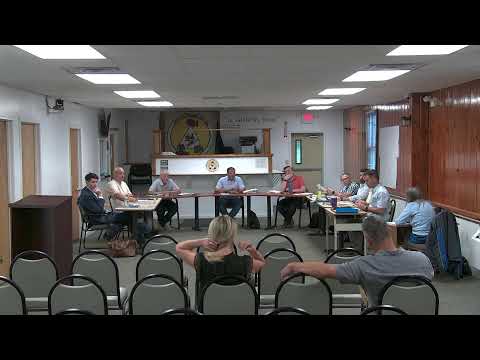
Planning board grants use variance to allow events venue at historic Moer Farm
Summary
The Town of Queens board granted a use variance July 2 to Michelle and Mark Dorsy for 880 Bridge Street (tax map 131-4-12.1) to repurpose an existing farm building for events and agricultural programming, subject to site-plan review and permits after a SEQR negative determination.
The Town of Queens Planning Board/Zoning Board of Appeals on July 2 granted a use variance to Michelle and Mark Dorsy to repurpose an existing building at 880 Bridge Street (tax map 131-4-12.1) as a multi-purpose events and agricultural venue, subject to conditions including compliance with all required permits and a final site-plan review.
Joanne Cunningham, chair of the Albany County Legislature, urged the board to approve the application and described forthcoming county economic-development grants intended to support small businesses and farm diversification. The applicant, identified in the record as Mrs. Dorsy, emphasized the property's nearly two-century history as the Moer family homestead, noted the former Oakencraft equine hospital on the site and said the proposed use would support agriculture and preserve rural character: "This project does not take away from the rural character of this community. It celebrates it," the applicant said.
The board first conducted SEQR review, classifying the application as an unlisted action with the board as lead agency. After reading the SEQR questions aloud, the board concluded "no or small impact" on the factors reviewed and made a negative determination of environmental significance.
Board member Patrick Cronin summarized the four statutory factors required for a use variance (lack of reasonable return, uniqueness, neighborhood character and self-creation). Cronin said the applicants had shown substantial investment, identified jurisdictional complications where the town line runs through the parcel and noted ambiguity in the zoning code; he concluded the property demonstrated an unnecessary hardship under the tests the board applies: "I find that there is an unnecessary hardship," he stated.
A motion to approve the use variance carried after a roll-call vote. In the transcript several members answered "I" during roll call (Michael Magcguire, Steven Deetsz, Patrick Cronin, Nathan Boomer, and others recorded in the roll-call exchange), and the board approved the variance with conditions: (1) the approval does not relieve the applicant from complying with all federal, state, county and local codes and permits; and (2) approval is subject to site-plan review and final site-plan approval under chapters 136 and 165 of the Town of Queens code. No construction or change of occupancy will be permitted until final site-plan approval and all conditions are satisfied.
Board members also explained practical next steps: the current minor building permit for roof, windows and insulation must be closed; the applicants must coordinate with town staff (referred to in the record as Jason); and the applicants will need an engineer to prepare materials for the site-plan review.