Get Full Government Meeting Transcripts, Videos, & Alerts Forever!
Get email alerts on the Zoning Commercial In A1 topic
No spam. Unsubscribe anytime.
Cannon County asks planning commission to rewrite zoning criteria before barring commercial uses in A1
Summary
After hours of public comment, the county commission voted to send the proposed amendment that would prohibit C1 commercial uses in A1 agricultural zones back to the planning commission for clearer, objective standards required under recent state law changes.
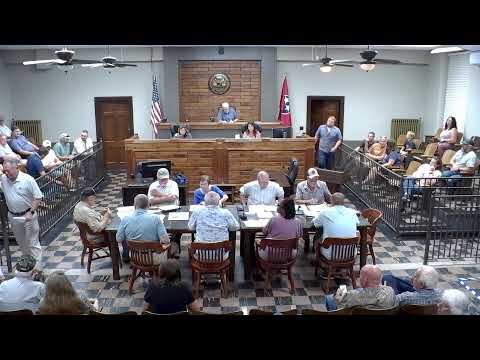
The Cannon County Commission on Tuesday directed the planning commission to resubmit its proposed amendment that would effectively pause new commercial C1 uses in A1 agricultural zones until objective criteria are drafted and approved.
Patricia, a member of Cannon County’s planning commission and zoning board, told the commission the state quietly amended zoning law and added 11 new paragraphs requiring ‘‘specific and objective standards by which special exceptions are evaluated.’’ She said the planning commission’s recommendation is to ‘‘prohibit C1 commercial uses in A1 agriculture until the board of zoning appeals criteria is established and approved by the county commission,’’ a process she estimated could take up to six months with the available volunteer staff.
Residents who spoke during the public hearing gave mixed testimony. Melissa Martin, who identified herself as a District 3 resident and small business owner, said, ‘‘before 2018… there were very few restrictions,’’ and warned that a blanket ban would harm small operators and local entrepreneurship. John Eubank, a longtime resident, framed his opposition around personal liberty: ‘‘we want to stay free… we want to be able to do what we want to do on our land.’’ Conversely, supporters of the planning commission’s approach argued objective criteria would help the county evaluate applications consistently and protect health, safety and welfare.
County staff and the planning commission explained the legal tension: under the new statutory language the board of zoning appeals cannot deny a special exception on broad quality‑of‑life grounds unless those grounds are clearly defined in the local resolution. Patricia said that, absent objective standards, ‘‘you could have a public hearing and people could speak and the zoning board cannot make a decision based upon anything you’ve said unless we put it in the ordinance.’’ She urged the commission to allow staff and volunteers time to draft standards that will enable proper public consideration of traffic, safety or other impacts.
After public debate the commission voted to require the planning commission to resubmit the resolution with more detailed, objective criteria and a clearer timeline. The motion passed on a recorded vote (seven to three). Commissioners who voted in favor cited the need for precise standards to comply with state law and to make public testimony meaningful; those opposed said they favored leaving rules as they are until new criteria were ready.
What happens next: the planning commission will draft objective standards for special exceptions and return the item to the county commission for another public hearing and final action. The commission’s directive did not retroactively remove any existing, grandfathered commercial uses; staff advised that properties already zoned commercial remain permitted under current rules.