Get Full Government Meeting Transcripts, Videos, & Alerts Forever!
Get email alerts on the Housing Adaptive Reuse topic
No spam. Unsubscribe anytime.
Cookeville council approves first reading to allow limited motel-to-apartment conversions with affordability rules
Summary
The Cookeville City Council on July 2 approved on first reading a zoning text amendment that would let owners convert existing motels to multifamily housing on appeal to the Board of Zoning Appeals, with safeguards including building-code compliance and a requirement that at least 20% of units be held for households at or below 50% AMI; council asked staff for additional financial analysis before second reading.
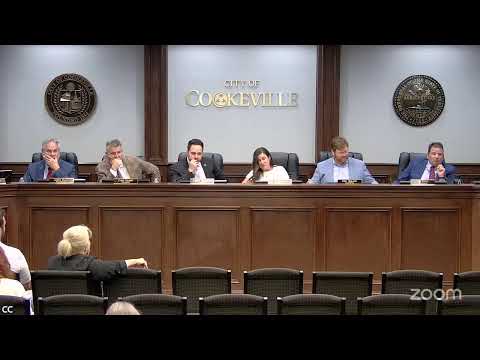
The Cookeville City Council on July 2 approved on first reading a text amendment (O-26-06-11) that would allow limited conversions of existing hotel or motel buildings to multifamily residential use in the CI zoning district, subject to a special-exception review by the Board of Zoning Appeals.
Planning staff described the proposal as narrowly tailored to existing buildings and prompted by inquiries from owners of properties already serving as long-term housing, including the former Fall Creek Inn now operating as HomeBridge Suites on Salem Road. The ordinance would require compliance with building and life-safety codes, allow participation in housing-choice voucher and TNHDA project-based voucher programs, and require an annual occupancy and rental report to the Community Development Department.
“Specifically, at least 20% of the units must be occupied by households earning no more than 50% of the area median income or 40% of those units by households earning no more than 60% of the area median income,” planning staff said, noting the proposal uses HUD AMI figures as the affordability benchmark.
Michael Bowie, owner of HomeTowne Suites Extended Stay, told the council his property already functions largely as long-term housing and said reclassification to multifamily would allow access to different financing and enable the property to accept vouchers. “One hundred bucks plus or minus is a life-changing amount of money,” Bowie said, arguing that tax and financing changes could reduce costs for residents.
Council members spent extensive time asking technical questions about the effect on sales and occupancy taxes, the mechanics of continuous stays, and how lease lengths would affect tax collection. A city staff member clarified local practice: the city occupancy tax is collected on short-term stays (collected day 1 through day 30) and stops after the continuous-stay threshold; county and state collection windows differ and were discussed.
Several council members pressed staff for more detailed math and market comparables before second reading. Concerns included the per-square-foot cost of converting small hotel rooms into residential units and whether the proposed rent caps and AMI percentages strike the intended balance between affordability and project viability. One councilor said the ordinance “could be the greatest thing ever or it could be a disaster” and asked for a spreadsheet of rent scenarios and comparable projects.
The council voted to approve the ordinance on first reading with the understanding staff would return with additional analysis and potential amendments at the second reading; the recorded vote on the item was four yes, motion carries. Legal counsel indicated the city could amend the text at second reading.
Next steps: staff will prepare additional financial analysis and comparables for council review before the second reading, when the council may amend the ordinance or vote to adopt a revised text.