Get Full Government Meeting Transcripts, Videos, & Alerts Forever!
Get email alerts on the Parks And Recreation topic
No spam. Unsubscribe anytime.
Parks director advises Whiteland Town on staffing, grants and low-cost park options
Summary
Chris Wilson, Bargersville parks and recreation director, told Whiteland trustees they should prioritize grant-ready master-plan projects, build an asset-replacement plan, and consider low-cost amenities (trails, disc golf, dog parks) while staffing and operating a splash pad safely.
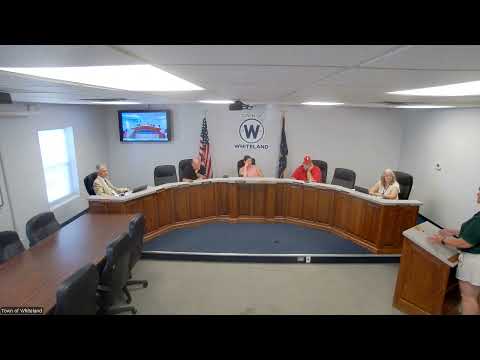
Chris Wilson, director of parks and recreation for the town of Bargersville, advised Whiteland Town trustees on how to start and scale a municipal parks program during the board's regular meeting. Wilson outlined staffing needs, funding sources, grant eligibility tied to a state-approved master plan, and technical requirements for splash-pad operations.
Wilson said his department began in 2023 after a park board formed and produced a five-year master plan. "My name is Chris Wilson. I'm the director of parks and recreation at the town of Bargersville," he said, describing how the plan's approval by the state Department of Natural Resources (DNR) opened eligibility for grants such as the Land and Water Conservation Fund. "The reason you get it approved by DNR is that opens you up for grant opportunities," he told the board.
Why it matters: Trustees are considering how to develop newly donated parcels and expand services without overcommitting operating dollars. Wilson urged focusing on attainable priorities from the master plan and ensuring the town can operate any grant-funded facilities it builds.
Key operational recommendations
- Staffing and structure: Wilson said his full-time staff at Bargersville includes a maintenance supervisor, a program manager and himself; part-time teams expand seasonally. "Currently, we have three full-time," he said, adding the part-time roster grows to roughly seven in maintenance and three in programs during peak periods.
- Budget and capital planning: He reported an initial parks operating budget of about $300,000 funded through town operating funds and property tax revenues and recommended creating an asset list and capital-improvement plan for future replacements (HVAC, roofs, equipment) rather than relying on ad-hoc spending.
- Grants and consultants: Wilson recommended getting a master plan approved by DNR to unlock grant eligibility and said hiring a full-time grants person is often unnecessary; consultants or part-time staff can be effective for grant applications.
- Volunteer coordination and partnerships: He encouraged formal volunteer programming for cleanups and event support and early coordination with the town's development staff so donated or dedicated land is usable parkland rather than marginal open space.
Splash pad and facility operations
Wilson walked trustees through technical differences between closed (recirculating) and open splash-pad systems and explained public-health implications. "We have a 4,000-gallon tank," he said, noting closed systems must be treated and tested and may require health-department inspection similar to pools. He recommended staffing or monitoring high-use splash pads and planning for daily chemical testing and maintenance.
Low-cost amenities and small-park ideas
For smaller donated parcels (two to five acres), Wilson suggested low-cost, community-driven features such as paved and natural trails, disc-golf courses, dog parks with rotation for large/small dogs, pump tracks for teens, and small playgrounds or natural-play areas. He urged trustees to survey resident preferences before committing capital.
Facilities, security and rentals
Wilson recommended building larger three-season shelters when feasible, using prefab restroom units, and establishing a clear resident/nonresident rental policy; he cited a nonresident shelter rate of about $56 per day in his municipality as a comparable benchmark. On security, he described camera installations at major parks and transferring camera operations to the police department for ongoing monitoring.
Next steps
Trustees thanked Wilson and indicated they would take his recommendations into account when preparing a parks budget request and determining priorities for the donated parcels. The meeting concluded with routine housekeeping items and a motion to adjourn.
All direct quotations and technical details are drawn from the meeting transcript of the Whiteland Town trustees meeting on the date of this record.