Get Full Government Meeting Transcripts, Videos, & Alerts Forever!
Get email alerts on the Lsv Policy topic
No spam. Unsubscribe anytime.
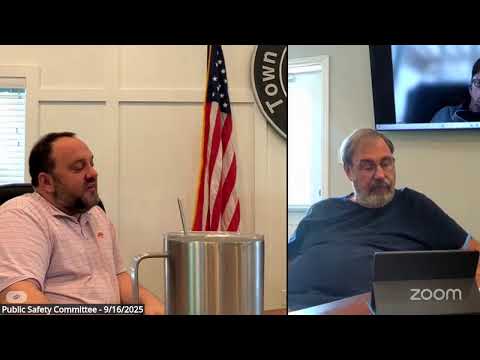
Seabrook Island committee weighs pullovers, speed changes and bans for low-speed vehicles
Summary
Committee continued a multi-month review of low-speed vehicle (LSV) policy, listing six options (no action, further study, pullover areas, lower speed limit, ban, enforcement changes) and asking staff to collect data and seek engineering analysis before a recommendation.
The Seabrook Island Public Safety Committee continued a months-long review of low-speed vehicle (LSV) policy and identified a short list of options for further study, including no action, data collection, pullovers, speed-limit changes, bans and enforcement strategies.
Chair outlined the committee’s timeline and objectives, saying the body will compile a definitive list of considerations in the coming month, return in October to refine the list, and prepare a formal recommendation for the council in November. “For this committee to recommend that no action be done. No action is a decision,” the Chair said, stressing that inaction is itself a policy choice.
Why it matters: LSVs are increasingly present on Seabrook Island Road and nearby roads; members said choices about traffic control, infrastructure and enforcement affect safety, resident convenience and emergency access. The committee balanced multiple concerns: the safety of slow-moving vehicles interacting with faster traffic, enforcement feasibility (Charleston County Sheriff responsibility), environmental and maintenance impacts of recommended infrastructure, and seasonal variation in LSV use.
Options the committee discussed
- No-action / defer: Several members suggested taking no immediate regulatory step until more data are collected. One suggested continuing counts and monitoring to determine how pervasive LSV traffic is during different seasons.
- Pullover area on Bohickey Road: The Chair proposed a gravel pullover near the old bank/Marina entrance to allow LSVs to pull aside. Members warned that simple gravel pullouts could create hazards (spinouts, unauthorized off-road driving) and that any design should be engineered, permitted and timed with planned repaving.
- Speed limit reduction: A proposal to lower Seabrook Island Road from 35 to 30 mph was discussed to reduce speed differentials when LSVs are present, especially near the traffic circle and urgent-care access.
- Ban or legal change: Committee members considered banning LSVs on the road or raising the speed limit so LSVs would no longer be lawful there, but noted enforcement would depend on Charleston County Sheriff resources and county enforcement priorities.
- Infrastructure alternatives: Ideas included adding an LSV/bike lane or widening the pedestrian path to provide a separate corridor for LSVs; members said those options are likely costlier and would require engineering and permitting.
- Data collection and enforcement options: Members recommended installing speed-monitor signs and conducting multi-season vehicle counts (one week per season) and exploring camera footage (including asking SAPOA about gate cameras) to establish baseline LSV numbers. Speed monitors only show speed; they do not identify vehicle type without corroborating footage.
Committee members emphasized engineering review before installing pullouts or changing lane geometry. One member said a simple pullout that forces slow-moving traffic to re-enter faster lanes without acceleration or passing lanes could worsen safety; an engineer should assess sight lines, acceleration lanes and permitting needs.
Next steps: The committee agreed the six points will be the focus of the next meeting. Staff was asked to gather data (speed monitors, gate camera availability, county crash reports) and commission an engineering feasibility study for pullovers/passing lanes; no ordinance or ban was adopted at this meeting.
The committee set its next meeting for October 21.