Get Full Government Meeting Transcripts, Videos, & Alerts Forever!
Get email alerts on the Budget topic
No spam. Unsubscribe anytime.
Marlboro County board reviews budget outlook, enrollment decline and $4.2 million in facility priorities
Summary
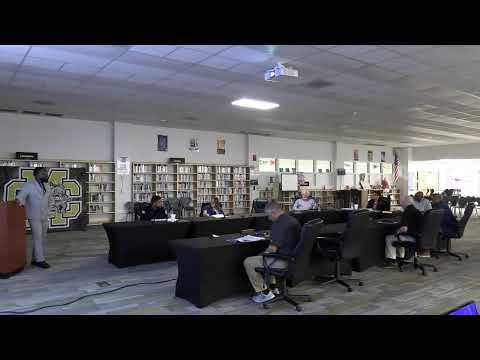
At a March 24 budget workshop, Marlboro County School District finance staff presented FY2024–25 projections, student enrollment declines and a $4.23 million list of capital and maintenance needs; the board approved certified hires and staffing recommendations and moved into executive session on personnel.
The Marlboro County School District board on March 24 reviewed preliminary revenue projections, enrollment trends and a prioritized list of capital and maintenance needs that together frame the district’s FY2024–25 budget work.
Kumari Benjamin, introduced as the district’s executive director of finance, opened the workshop by warning that state budget figures may change and that the district’s adopted budget for the year currently stands at about $45 million. “Salaries and benefits take the majority of our budget — about 86 to 87%,” Benjamin told the board, noting limited flexibility in general operations and the uncertainty of local sales tax receipts.
Benjamin said the state has notified the district of an increase to the tier‑three homestead exemption reimbursement — “we will be receiving an increase of 241,000,” she said — bringing the reimbursement total to roughly $3.8 million from about $3.6 million in prior figures.
Enrollment trends were front and center. Benjamin presented the district’s 45‑ and 135‑day average daily membership counts across three years: 45‑day figures moved roughly from 3,414 to 3,291 to 3,215 in the most recent years presented, while the 135‑day counts showed similar multi‑year variation. School‑by‑school breakdowns showed declines at several elementary and middle schools and a roughly 1,000‑student level at the high school. Board members asked staff to return with more analysis on drivers of the decline, including birth rates, out‑migration and inter‑district transfers.
Staffing and vacancies were also highlighted. Benjamin reported the district employs 678 people (623 full‑time, 55 part‑time) and said the board previously approved a $500 bonus for employees under established criteria. The district reported 45 total vacancies districtwide, which the finance director clarified included classified positions; the board was told there are about 30 teacher vacancies when classified roles are excluded.
Capital and maintenance demands competed for attention. Mr. Davis walked the board through a spreadsheet of prioritized requests that totaled $4,226,388 in preliminary estimates. Major items included stadium lighting (an estimate starting around $300,000), HVAC repairs at the high school (a prior vendor quote of about $2.2 million was cited), playground and field work, bus‑area repaving (estimated $250,000 at one school), and various school‑level needs such as restroom and PA system repairs, window work and security signage.
Several board members pressed staff for documentation about where previously appropriated funds for HVAC and related work had been placed. A board member asked for a clear accounting of past expenditures tied to the district’s earlier ESA allotments and said the board should be able to verify that equipment bought with those funds was installed at the intended sites. Maintenance staff and administration said they would pull placement records and bring details to the next meeting.
The workshop also covered technology and transportation items: Chromebook refreshes funded through ESA were largely complete, smartboard and phone/PA work was in progress at some sites, two‑way radio quotes and activity‑bus estimates (roughly $500,000 for four buses) were presented, and administration recommended adding a restroom at the transportation office (estimated $30,000) so drivers working before schools open would not use student facilities.
On personnel matters the board took formal actions after returning from an executive session. Mr. Driggers moved to approve two certified recommendations presented by Dr. Tiller; the motion was seconded and approved by hand raise. A related motion to approve staffing recommendations presented by Dr. Tiller was likewise seconded and approved by assent. Prior to executive session the board had voted to go behind closed doors “to discuss personnel matters and recommendations for school staffing.”
Benjamin told the board auditors are expected to deliver a clearer picture of the district’s fund balance in the coming weeks; trustees urged caution before drawing down reserves and emphasized the need to protect a safety net for unanticipated costs.
The board was asked whether it wanted staff to pare the capital list down to bare necessities; members agreed staff should identify essentials the district must fund to operate. The next regular board meeting is scheduled for April 7. The board adjourned the March 24 workshop by voice/hand raise.
Notes: Where transcript figures were unclear, the article reports the amounts and counts as the district presented them (examples: $45 million adopted budget, $4,226,388 preliminary capital estimate, 678 employees, and the reported $241,000 increase in homestead reimbursement).