Get Full Government Meeting Transcripts, Videos, & Alerts Forever!
Get email alerts on the Harbor Master Transfer topic
No spam. Unsubscribe anytime.
Committee delays vote on bill to move harbor rulemaking from DHCD to DOT after enforcement questions
Summary
Baltimore City committee heard a DOT presentation on transferring harbor rulemaking authority from DHCD to DOT (Bill 260178), including expanded harbor-master responsibilities and enforcement powers; members deferred a vote for one week to resolve questions about property-maintenance enforcement, lighting responsibility, and the geographic scope of authority.
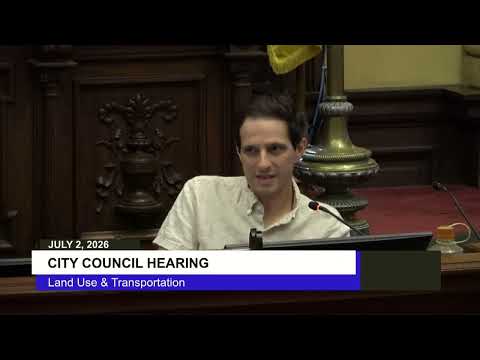
A Baltimore City Land Use and Transportation Committee hearing on July 2 considered a city administration bill (260178) to transfer rulemaking authority over the Baltimore Harbor from the Department of Housing and Community Development (DHCD) to the Department of Transportation (DOT).
Brett Thorne, acting assistant deputy director for planning and sustainable transportation at DOT, told the committee the transfer would place the harbor master and related rulemaking in DOT and clean up antiquated elements of Article 10 of the city code. Thorne said the harbor master currently manages about 5,000 linear feet of public docking, collects fees, oversees leases and warfage agreements affecting public access, advises on waterfront development, and coordinates safety with the Baltimore Police Department and other agencies. He said DOT has worked with DHCD, BPD, the state and the Coast Guard to propose the amendment.
Mike McGatty, who identified himself as the harbor master at DOT, described the harbor master's operational role and the office's patrol, signage and event-support functions. He said DOT already participates in a 2023 baseline services agreement under the Waterfront Partnership’s Waterfront Management Authority that designates maintenance responsibilities among stakeholders and that DOT is responsible for Promenade lighting under that agreement.
Committee members pressed DOT and the harbor master on enforcement mechanics where private property abuts the waterfront. Several members noted that under current practice DHCD issues property-maintenance citations and asked whether transferring rulemaking to DOT would change who issues those citations along privately owned portions of the Promenade. DOT staff said agencies have different citation books and training; DOT can appoint special enforcement officers but the specific citation authority remains agency-dependent. DOT characterized the harbor master role as an ‘‘additional set of eyes’’ to catalyze repairs and coordinate other agencies rather than a wholesale replacement of existing code-enforcement authority.
Members also raised the bill’s language on discharge fines and enforcement, noting that phrases such as "any substance or waste" could be interpreted broadly across streams and sewers that feed the harbor. The harbor master said the language is intended to be expansive to enable rapid identification and coordination in response to spills or unusual discharges.
Separately, members asked whether the transfer would affect efforts such as changing speed limits for a harbor connector water transit route; DOT and the harbor master said state agencies (Maryland Department of Natural Resources and the U.S. Coast Guard) set boating regulations, and the city would still need to partner with those bodies through the harbor safety committee to request exceptions.
After extended questioning about jurisdictional scope, how lighting and property-maintenance enforcement would be exercised, and which structures would fall under harbor-master authority, Chair Ryan Dorsy said the committee would hold a vote until next week so staff and agencies could provide additional clarifications. The Law Department told the committee it approved the bill as to form and legal sufficiency and had recommended technical amendments DOT intends to introduce; DOT presented a favorable report subject to those amendments. The committee scheduled the bill for reconsideration at its next meeting.
The hearing record shows DOT and partner agencies are prepared to work on clarifying operational responsibilities, signage, camera coverage, and a safety plan. The committee did not take a final vote on 260178 on July 2.
The committee adjourned consideration of Bill 260178 to the next scheduled meeting, with staff directed to provide clearer cross-agency enforcement guidance and answers about maintenance responsibilities along privately owned portions of the Promenade.