Get Full Government Meeting Transcripts, Videos, & Alerts Forever!
Get email alerts on the Homelessness topic
No spam. Unsubscribe anytime.
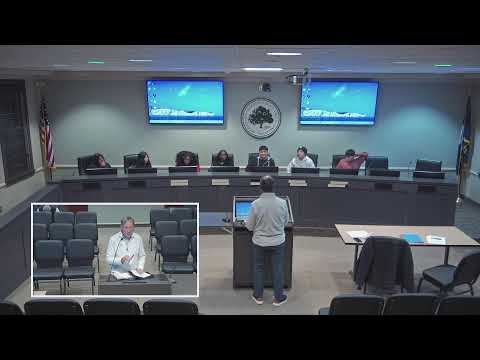
Hardeeville youth council approves soup kitchen, donation drive for people experiencing homelessness
Summary
At a youth council meeting, members voted to hold a soup kitchen and run a community drive collecting clothing, hygiene products, snacks, small flashlights and umbrellas for people experiencing homelessness; police advised against donating tents or cooking equipment over safety and legal concerns.
The Hardeeville Youth Council voted to hold a soup kitchen and community donation drive that will collect clothing, hygiene products, snacks and small practical items for people experiencing homelessness, the council decided during its meeting.
The council approved a motion to organize a one-day soup kitchen that will also distribute donated goods, including coats, jackets, boots, shoes, hygiene kits, snacks, small flashlights and umbrellas. Assistant Police Chief Scott Cavalia told the group that some suggested items — notably tents and grills — risk encouraging encampments on private property, can create sanitary and fire hazards and could conflict with South Carolina law or city ordinances. “On the surface those all seem very legitimate needs, it causes untold problems,” Cavalia said, urging the council to focus on items such as coats and waterproof jackets that do not create the same hazards.
Why it matters: The youth council was charged in a prior meeting with reviewing the local homeless population and proposing practical actions and supports before the school year concludes. Members said they wanted to move from study to execution: collect tangible items that meet immediate needs, leverage school and community donation drives, and stage a direct-distribution event.
Council members and volunteers discussed several approaches for gathering supplies. Law enforcement and other speakers recommended asking each school to collect any items from a prepared list rather than assigning each school a single item category, reasoning that a single school assigned one category might produce an unbalanced set of donations. The group also agreed to solicit donations from gated communities and previous generous donors if items were short.
The council discussed fundraising ideas — dress-down days, candy-bar sales and similar school fundraisers — to buy supplies when needed, but several members cautioned against collecting cash for direct distribution because some donors fear it could be used to purchase drugs, alcohol or cigarettes. One speaker said tangible items reassure donors the help will be used for basic needs.
Practical steps and assignments: Emanuel volunteered to draft a flyer and the city’s media department offered to help refine and distribute it. The mayor scheduled outreach opportunities at community meetings (noted dates included Monday, January 26 at 4:00 p.m. and a meeting on February 6) and set a target of executing the soup kitchen and distribution in April, after two more planning meetings in February and March. Volunteers were asked to serve as collection leads at their respective schools to place collection boxes and liaise with principals.
Formal action: The youth council approved the motion to hold a soup kitchen and collect clothing and hygiene items by voice vote after members indicated “I” when the chair called for those in favor. The motion was carried; no roll-call tally was recorded in the transcript.
What the council did not decide: Members did not approve building a shelter or any long-term housing structure. Participants raised the idea of constructing a building but the mayor and others warned it would be expensive, would require approval and could attract more people to the site; they said any such recommendation would have to be sent as a resolution to the full city council for further consideration.
Next steps: The youth council will finalize logistics over the next two meetings, produce and distribute a flyer listing requested items and collection points, coordinate outreach to gated communities and schools, and set a firm April date for the soup kitchen and distribution.
Quotes from the meeting
“While on the surface those all seem very legitimate needs, it causes untold problems,” Assistant Police Chief Scott Cavalia said of donations such as tents and grills, adding that donations should focus on items that keep people safe without encouraging encampments.
“If it's a fundraiser, each one of you will have a lot more work to do,” the mayor said, urging members to consider the time commitment needed to raise funds.
“We're going to have a soup kitchen, and we're going to give out clothing,” a council member summarized after passage of the motion.
Ending note: The youth council adjourned after assigning volunteers and setting outreach dates, and the mayor praised participants for productive discussion and planning.