Get Full Government Meeting Transcripts, Videos, & Alerts Forever!
Get email alerts on the Alpr Policy topic
No spam. Unsubscribe anytime.
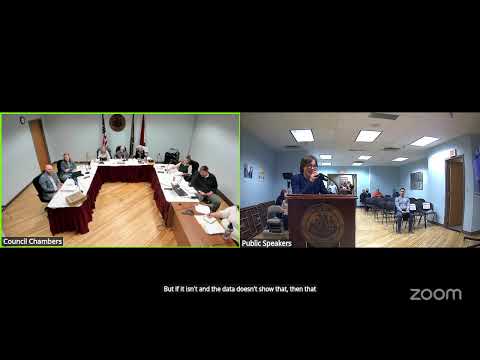
Troy council introduces ALPR limits after heated public forum; mayor urges caution
Summary
Following a lengthy public forum, the council introduced a proposed local law to limit automatic license-plate readers (ALPRs) and scheduled a public hearing for June 4; the mayor opposed strict restrictions, while residents demanded audits, a 48‑hour retention cap, and possible cancellation of the city's Flock contract.
The Troy City Council unanimously moved to introduce a local law on May 7 to establish standards governing the city's use of automatic license-plate readers (ALPRs) after an extended public forum marked by passionate, divided testimony.
Council Member McKe presented the draft local law as an attempt to “provide guard rails necessary to protect privacy rights while preserving law-enforcement ability to use the technology,” and the council scheduled a public hearing for June 4 at 5:30 p.m.
The mayor spoke in strong opposition, arguing the proposed restrictions would “tie the hands of law enforcement,” limit investigative capacity, and could prematurely delete evidence. The mayor warned that limiting ALPR searches to vehicles connected only to outstanding felony warrants or requiring a 48-hour deletion window could impede ongoing investigations and expose the city to risk.
Residents and advocacy groups delivered sustained testimony on the opposite side. Multiple speakers urged strict limits and transparency: they asked the city to order an audit of who has accessed ALPR data, to require that private vendors not share city-captured data nationally, and to adopt a short retention period (many supported a 48-hour maximum). Speakers cited national examples of vendor data-sharing and high-profile lawsuits tied to false identifications; they also raised cybersecurity concerns and warned of stalking and surveillance misuse.
Supporters of restrictions pointed to case examples and liability risks: speakers noted a multimillion-dollar settlement in another city stemming from an ALPR false hit and urged caution because private contractors can share or retain data beyond local control. Several testified they had requested access to usage logs and agency audits and said those requests were not fully answered.
Why it matters: The measure would be the city’s first comprehensive policy on ALPR systems and could change operational practices, vendor contracts and oversight. Councilors emphasized continued dialogue with law enforcement and the public before finalizing the law.
Next steps: The council will hold the scheduled public hearing and accept additional testimony and possible amendments before voting on the local law.