Get Full Government Meeting Transcripts, Videos, & Alerts Forever!
Get email alerts on the Good Cause Eviction topic
No spam. Unsubscribe anytime.
Troy council hears hours of public testimony and schedules hearing on good-cause eviction
Summary
Hundreds of residents and advocates urged the Troy City Council to adopt good-cause eviction protections; the council introduced Local Law No. 1 to opt Troy into New York's Article 6-A and scheduled a public hearing for Feb. 19 at 5:30 p.m.
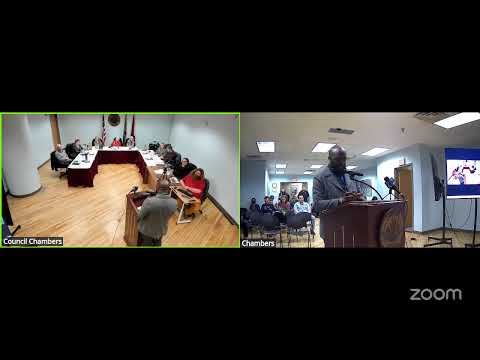
The Troy City Council spent much of its February meeting fielding sustained public comment urging it to adopt good-cause eviction protections and to move beyond existing code-enforcement practices.
Speakers during a lengthy public forum described housing instability, repeated habitability problems, landlord retaliation and barriers in housing court. Lana Knight of the Good Cause Troy Coalition said the statewide Good Cause law adopted in April 2024 left municipalities to opt in and described strong local organizing ("we collected 1,800 signatures"). Tim Sar, who works in Troy City Court, warned that tenants often lack appointed counsel in civil matters and face eviction without adequate legal assistance.
Council members introduced Local Law No. 1, which would adopt the provisions of Article 6-A of the New York Real Property Law to make good-cause eviction applicable in Troy; the introduction was for first reading only. The council voted to schedule a public hearing on the proposed local law for Thursday, Feb. 19 at 5:30 p.m.
Advocates and service providers urged the council to pair good-cause eviction with other measures, including stronger code enforcement, eviction-court reforms and rent-guidelines or Emergency Tenant Protection Act-style tools. Commenters cited concrete harms: displaced families, children removed from schools, mold and repeated roof collapses, and limited rental assistance or court protections for low-income residents.
A number of speakers — organizers, labor representatives, housing counselors and residents who said they had experienced habitability failures and retaliation — asked the council to pass the local law and pursue complementary steps such as pro se assistance in housing court, vacancy studies and a tenant-landlord relations council.
The council did not vote on the local law itself; the hearing is set for Feb. 19 at 5:30 p.m., after which the council may consider amendments, adoption, or other next steps.