Get Full Government Meeting Transcripts, Videos, & Alerts Forever!
Get email alerts on the Good Cause Evict topic
No spam. Unsubscribe anytime.
Troy council adopts local "good cause" eviction law after hours of public testimony
Summary
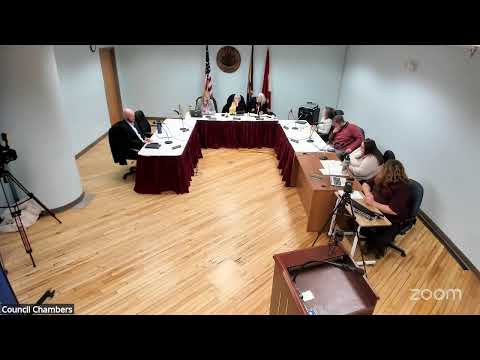
After more than an hour of public testimony from tenants and landlords, the Troy City Council voted 6-0 on Feb. 19, 2026 to adopt a local law opting the city into New York State rticle 6-A ("good cause" eviction), establishing rent-increase limits and restrictions on nonrenewals; council members discussed exemptions and enforcement concerns.
The Troy City Council voted 6-0 on Feb. 19 to adopt a local law that applies Article 6-A of New York State—ivil property law in Troy, enacting a local "good cause" eviction standard after a public hearing that drew dozens of residents and property owners.
Proponents said the ordinance will give long-time renters basic protections against abrupt nonrenewals and steep rent hikes. "Pass good cause," said Jude, a member of Troy Democratic Socialists of America who described a two-year campaign to bring the measure to the council. Senior resident Lunita Gresham told the council, "My fear is homelessness," describing how small annual rent increases cut into groceries and medicine for people on fixed incomes.
Landlords and owner-occupiers warned the law could leave small property owners exposed. Brian Marsh, who identified himself as a landlord and owner of multiple Troy parcels, said he lost "over $250,000 of income during COVID" and that "good cause eviction ... sways everything in favor of tenants without equal protections for small landlords." Several speakers asked the council to preserve a statutory small-owner exemption; some council members said they favored New York State's 10-unit exemption while advocates urged keeping a one-unit threshold to prevent evasion through LLCs.
On specifics, sponsors described the ordinance's rent-increase rule as a presumptive cap: a limit of 5% plus the annual Consumer Price Index or a flat 10%, whichever is lower, with the ordinance allowing exceptions where landlords can demonstrate extraordinary costs. Council member Campbell Cohen said that the cap is "presumptively unreasonable" when exceeded but that landlords can present proof to pierce that presumption for legitimate extraordinary expenses.
Speakers at the hearing recounted frequent housing problems in Troy: delayed emergency repairs, retaliatory nonrenewals, and a local court process that several commenters described as difficult for unsophisticated litigants. One participant cited local case counts in 2025, saying there were 154 holdover cases but 1,404 non-payment cases, and argued that most evictions are for non-payment rather than the narrow statutory causes the ordinance addresses.
Council debate framed the vote as an attempt to balance tenant stability and the realities of small property ownership. Council member Spain McLaren said the law is "not meant to stack the cards against good landlords" but to protect residents from being displaced by speculative or absentee owners. After discussion, the council moved the measure and recorded a 6-0 voice vote to adopt the law.
The ordinance will take effect according to the timeline set in city procedures and will be implemented through existing housing court channels and city enforcement mechanisms. The council and several speakers also urged parallel measures: stronger code enforcement, clearer permit processes, and expanded legal support for low-income tenants to enforce their rights.
The council closed the hearing on the local law and moved on to its next item.